Discovery Bay, CA
Ductwork and Airflow in Discovery Bay
A room that never gets comfortable while the rest of the house is fine is usually a duct problem rather than an equipment problem. Name the room, and whether it happens in heating or in cooling, and an independent contractor can come out to Discovery Bay and measure the airflow instead of guessing at it.
(888) 217-3739California contractors. No obligation for the call.
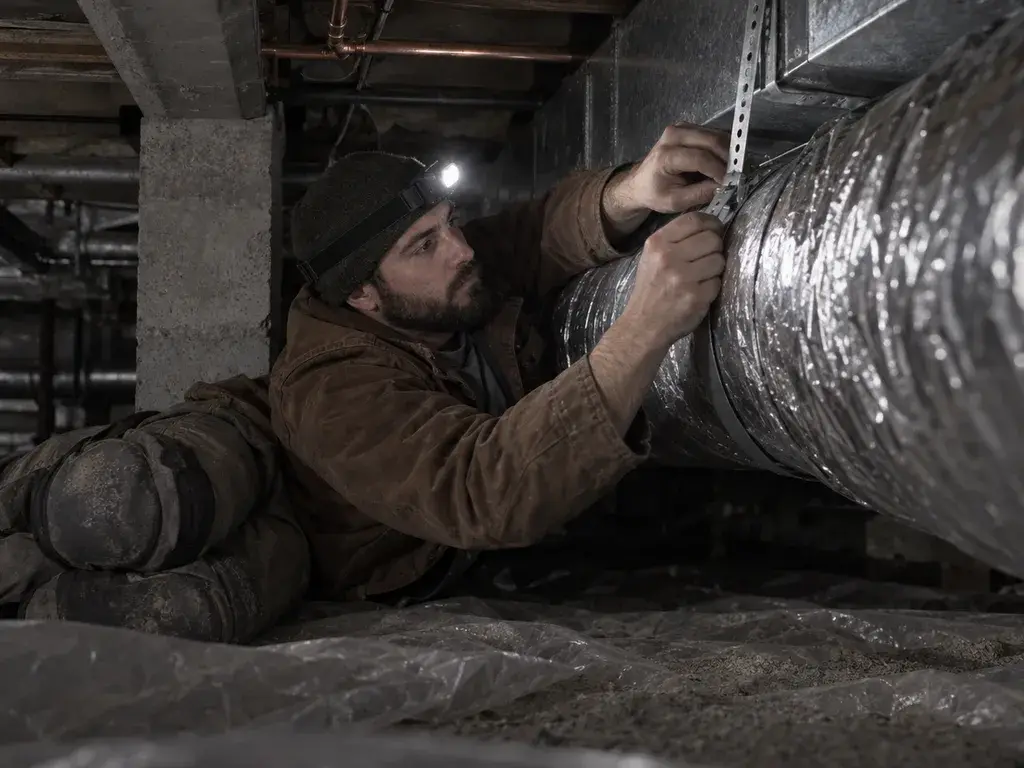
In Discovery Bay the system runs almost year-round, which makes duct leakage a standing loss rather than a seasonal one. There is also no quiet month in which the system can sit idle while somebody opens the duct up, which is why a contractor books this work around the weather rather than after it.
Where the duct runs through a vented attic, the attic is the hostile part: it sits far above the outdoor temperature through the middle of the day, and a supply run crossing it arrives at the register warmer than it left the coil. Nothing is leaking and nothing is broken — it is the tail of the run undoing part of the cooling, which is why the far room is the one that never quite gets there.
Where the heat comes from a heat pump, a long run costs more than the same run on a furnace. A heat pump delivers supply air at around 95°F and a furnace delivers it at around 120°F to 140°F, so there is less to give away before the air stops feeling warm at all. A room that cools fine and heats badly is often the same duct with less to spare — which is why what the system is belongs in the first minute of the call.
A return that leaks into an attic or a crawl space pulls outdoor air into the system at whatever the dew point outside happens to be, and the coil deals with that air before it deals with any room. The heating side pays for the same leak in winter, and no room feels wrong in either season while it happens. Most of what the coil does in this climate is still temperature rather than moisture, so the temperature split measured across it reads mostly as airflow — one reading at the air handler is worth more than an afternoon of opening and closing registers.
Why duct problems do not fix themselves
The cold room is what gets reported, and it is the smaller half of what is happening. A restricted return or a collapsed run raises the pressure the blower has to work against, and the blower works against it every hour the system runs — in the rooms that are fine as much as in the room that is not.
On the cooling side there is a path from that pressure to the expensive part. Not enough air over the coil lets the coil temperature fall until it ices; the ice blocks the coil, airflow falls further, and refrigerant that should have boiled off arrives back at the compressor as liquid. A contractor replaces a compressor rather than repairing one — that is where a duct problem stops being a comfort question.
The same shortage of air overheats a furnace on the heating side: the limit switch cuts the burner, the furnace relights, and it does that several times an hour for years. The other expensive ending is at replacement. A new system dropped onto duct that cannot carry its air does not perform the way the pair is rated, and a cold room that was a duct problem before the changeout is a duct problem after it.
What the store-bought fix actually does
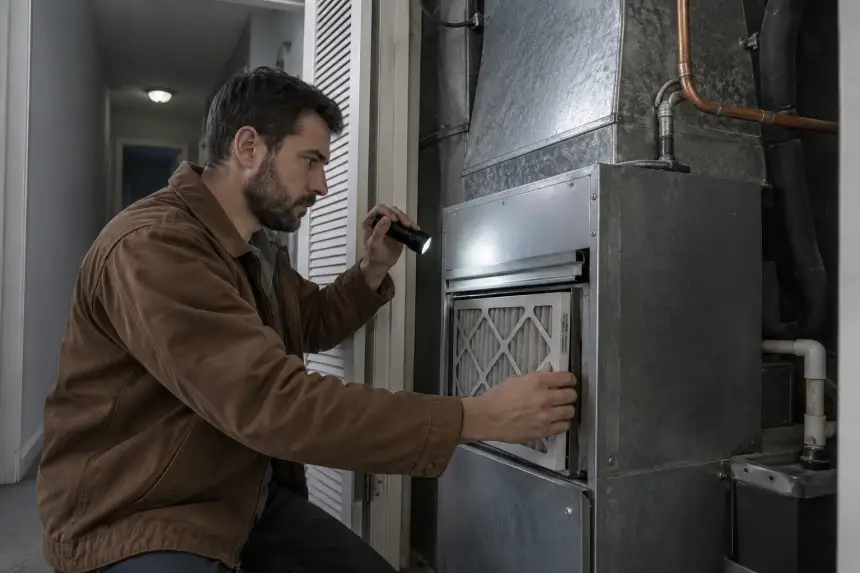
The filter is the one thing in the aisle that changes airflow at all, and where it has not been changed since the last season it is worth doing before the phone comes out. What it cannot do is reach any further than itself: a filter gives back the air the system already had, and it does nothing for a run that is crushed, pulled off its collar or leaking into a crawl space, and nothing for a return that was always too small. The version that backfires is the upgrade: a dense one-inch filter sold for allergens takes more pressure than the slot was built for, and a system already short of air gets shorter. If the room is still wrong with a clean filter in, the filter was never the answer.
Duct tape is named for the one job it does not hold. The cloth-backed roll dries out on a warm duct and releases, usually within a couple of years, and the joint is open again with nothing to show for the afternoon. What holds is mastic brushed on, or foil tape carrying a UL 181 marking on the roll — and both want the joint clean and dry, which is the hard part in a crawl space.
Shutting the registers in unused rooms feels like it should send the air somewhere useful. The air does not move to the weak room, it raises the pressure in the duct, and higher pressure pushes more of it out through every leak the system already has. Easing one register in a room that overshoots is a different thing, and that is what a damper does — the difference is one adjustment against half the house closed off. A booster fan at a register does anything at all only where the run behind it is sound, and on a run that is leaking or pulled off its collar it changes nothing.
When to stop and call
- The filter is clean, every register is open, and one room is still wrong.
- A room has never been comfortable since the system was replaced.
- A return grille whistles or roars, or the filter bows inward when the blower starts.
- There is a stain on a ceiling under a duct run, or duct insulation that is wet to the touch.
- Ice on the line at the air handler, or the system shutting itself off and starting again within the hour.
- The license
- Held by the contractor, not by this site, and issued where the work happens — California licenses at state level, at city level or not at all depending on the trade and the town. Ask for the number and the name it is held under: a trading name and the licensed entity are often not the same.
- The figure
- Set by the contractor and said before the work starts. This site never quotes and has no part in it. If a technician cannot say what the visit covers before beginning, that is the moment to stop.
- The call
- Describing what the system is doing commits you to nothing. Nothing is booked until you say so.
- Coverage
- By town, not by region. Discovery Bay and the towns around it, and it shifts with who is taking calls at the hour you ring.
What the visit involves
- 01
The diagnosis
At the thermostat first, then at the furnace or the condenser, in the order the equipment runs. What the system is doing is established before any part is named.
- 02
The finding, out loud
What failed, whether it is the fault or a symptom of another one, and whether the repair suits the age of the system. A diagnostic visit is usually charged separately from the repair — ask whether it is credited if the work goes ahead, because that differs from one contractor to the next.
- 03
The repair
Agreed with the contractor before it starts. Where a part has to be ordered, a technician says so rather than leaving the system apart.
- 04
What happens after
A system that failed once in a season often fails again in it. Whether that is the same fault or a second one is worth asking while the technician is still there.
What to have ready when you call
- 01Which rooms are wrong, and whether it is in heating, in cooling, or both — that one answer narrows it before anybody arrives.
- 02What size the filter is and when it was last changed, and whether any register or damper has been closed.
- 03Where the duct runs — a basement, a vented crawl space, an attic, or entirely inside the house.
- 04What the system is — furnace, heat pump, or a furnace with cooling added — and roughly what year it went in, and whether the installer replaced the duct with it or left it in place.
- 05The address and ZIP code, and what way there is in to the duct — an attic hatch, a crawl space door, or a basement with the runs in the open.
Do not go around opening and closing registers before the visit — a technician measures the system as it actually runs, and one damper moved this morning shifts every reading this afternoon.
Other services in Discovery Bay
Ductwork nearby