Butler Beach, FL
Heat Pump Repair and Replacement in Butler Beach, FL
A heat pump in Butler Beach, FL works in both seasons, so its repair or replacement starts with how it behaves in each. Butler Beach averages 5 days a year with a low of 32°F or colder and almost none at 20°F or colder (NOAA 1991–2020 normals, station 6 miles away). Half the homes in Butler Beach were built before 1988 (Census ACS 2019–2023). A split heat pump made since January 1, 2023 must rate at least 14.3 SEER2 and 7.5 HSPF2, a federal floor that does not change from state to state.
(888) 217-3739Florida contractors. No obligation for the call.
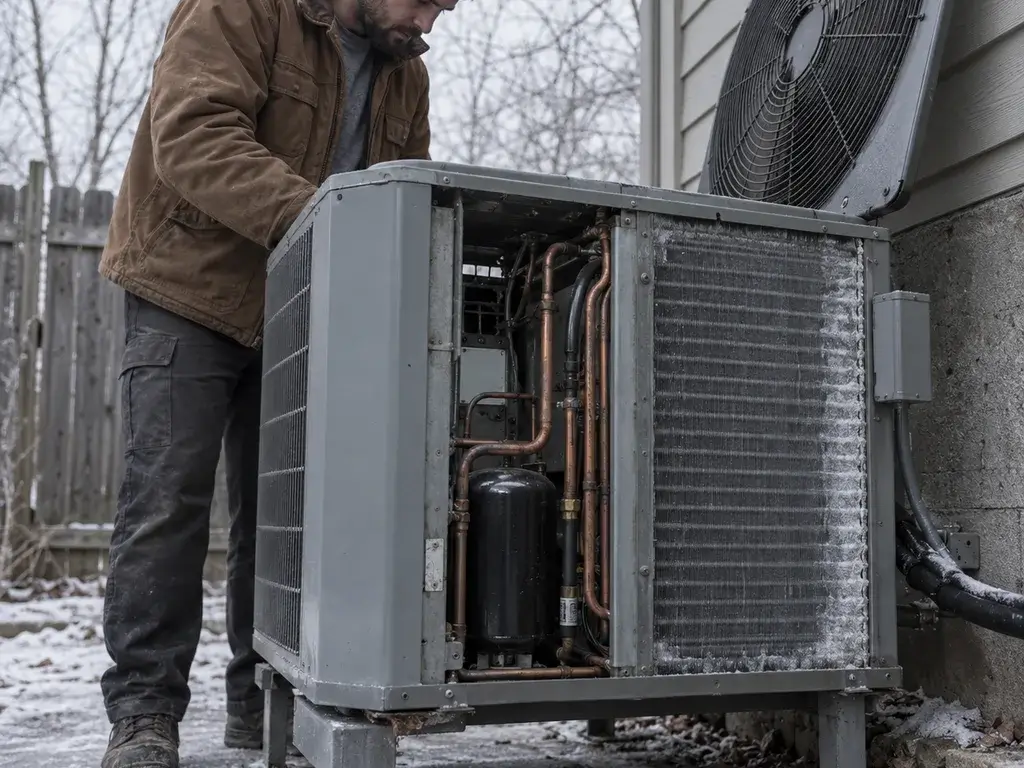
A heat pump blowing air that feels cool in winter is usually working as designed, and a heat pump that sits on auxiliary heat for hours in mild weather usually is not. Say what the thermostat reads and a heating and cooling contractor can come out to Butler Beach and tell the two apart.
In Butler Beach the cooling season is the year and the heating season is a handful of mornings. What a no-heat call means here depends on what else the house has: where there is a furnace, the heat pump has something to hand the load to, and where there is none — and in this climate plenty of houses have none — the only thing behind it is a bank of electric resistance strips. That is the first thing a technician asks about, because there is no second appliance to switch to.
Sizing here runs the opposite way from a cold climate: the cooling load sets the size, exactly as it would for an air conditioner, because it is the load that exists for most of the year — which is correct, and it also means that on the handful of genuinely cold mornings the machine runs without stopping and the strips carry what it cannot. A machine running continuously on a cold morning is doing its job, not failing at it.
Sizing a heat pump means sizing for two jobs at once, and in a July this wet they pull against each other. Size it for the coldest night and it is too large for the cooling season: it drops the temperature, shuts off, and never runs long enough to pull water out of the air, so the thermostat reads 74°F and the house still feels damp. That is where a single-stage machine runs out of options, and it is the argument for a compressor that modulates rather than one that is simply larger — long, slow run cycles are what dehumidify. Ask what the size was based on: a measurement of the house, with the heating load and the cooling load worked out separately.
Butler Beach, FL in numbers
| Days a year with a low of 32°F or colder | 5 | NOAA 1991–2020 normals, station 6 miles away |
|---|---|---|
| Days a year with a low of 20°F or colder | fewer than one | NOAA 1991–2020 normals |
| Average July dew point | 73°F | PRISM 1991–2020 normals |
| Median year homes were built | 1988 | Census ACS 2019–2023 |
| Households | 2,581 | Census ACS 2019–2023 |
| County | St. Johns County | Census Bureau |
| Federal minimum for a new split central AC | 14.3 SEER2 under 45,000 Btu/h (Southeast) | DOE, 2023 standard |
What the store-bought fix actually does
A hard-start kit does what it says on the box, and that is the problem with it. It adds starting torque, and a compressor that has begun to struggle will often run another season with one fitted — it is a real part, fitted deliberately on some systems, and not a gimmick. What it cannot do is say why the compressor needed help: a weak run capacitor, worn windings, or a system running at pressures it should not be. A kit fitted and then forgotten hides that question until the compressor answers it.
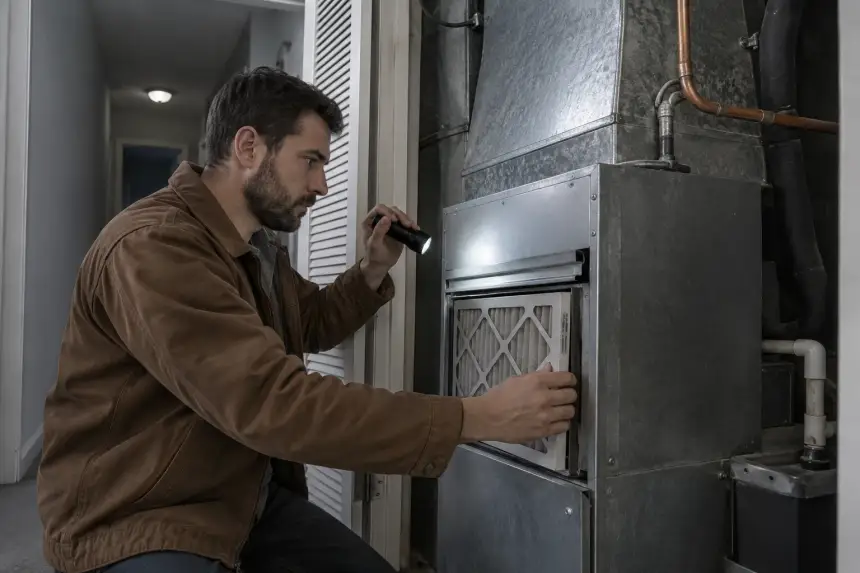
Signs it is time to call
- Ice covers the outdoor coil and the defrost cycles are not clearing it.
- The breaker feeding the outdoor unit or the air handler will not stay in.
- Refrigerant was added in an earlier season and the system is behaving the same way again.
- The license
- Held by the contractor, not by this site, and issued where the work happens — Florida licenses at state level, at city level or not at all depending on the trade and the town. Ask for the number and the name it is held under: a trading name and the licensed entity are often not the same.
- The call
- Describing what the system is doing commits you to nothing. Nothing is booked until you say so.
- Coverage
- By town, not by region. Butler Beach and the towns around it, and it shifts with who is taking calls at the hour you ring.
What a visit in Butler Beach involves
- 01
The finding, out loud
What failed, whether it is the fault or a symptom of another one, and whether the repair suits the age of the system. A diagnostic visit is usually charged separately from the repair — ask whether it is credited if the work goes ahead, because that differs from one contractor to the next.
- 02
The repair
Agreed with the contractor before it starts. Where a part has to be ordered, a technician says so rather than leaving the system apart.
- 03
What happens after
A system that failed once in a season often fails again in it. Whether that is the same fault or a second one is worth asking while the technician is still there.
What to have ready when you call
- 01That the system is a heat pump, and what carries the heat when it cannot — electric, or a gas furnace on the same ducts, and not knowing is a fair answer.
- 02Both thermostat numbers, and whether the display is showing auxiliary or emergency heat.
- 03Roughly what year it went in, and the refrigerant from the outdoor data plate — R-410A on most systems in service, R-454B on recent ones.
If the house has gone cold, emergency heat is what that setting is for — say on the phone that you switched to it, because it locks out the compressor, and the fault a technician needs to watch stops happening while it is on.
Heat Pumps in Butler Beach: questions
How many freezing days does Butler Beach have?
Butler Beach averages 5 days a year with a low of 32°F or colder and almost none at 20°F or colder, by the 1991–2020 climate normals for a NOAA station 6 miles away. Heating is a handful of mornings here, so a heat pump spends nearly the whole year cooling.
How humid are summers in Butler Beach?
The July dew point in Butler Beach averages 73°F, by the PRISM 1991–2020 climate normals. In air that wet an oversized air conditioner cools the house fast, shuts off before it has dried the air, and leaves rooms cool and clammy, which is why sizing starts with a load calculation for the house.
Is there still a federal tax credit for a new heat pump?
No. The 25C energy efficient home improvement credit ended for equipment installed after December 31, 2025, under the tax law signed on July 4, 2025. A quote that still counts it is out of date; a utility or state rebate is a separate program, and the contractor or the utility can say whether one applies.
Other services in Butler Beach
Heat Pumps nearby