Yukon, OK
AC Replacement in Yukon
An air conditioner that gives up on a hot afternoon has not automatically reached the end of its life, and what settles it is age, what failed, and what the system is charged with. Say what year the system went in and what it has started doing, and an independent contractor can come out to Yukon and size the replacement from the house rather than from the box being carried out.
(888) 217-3739Oklahoma contractors. No obligation for the call.
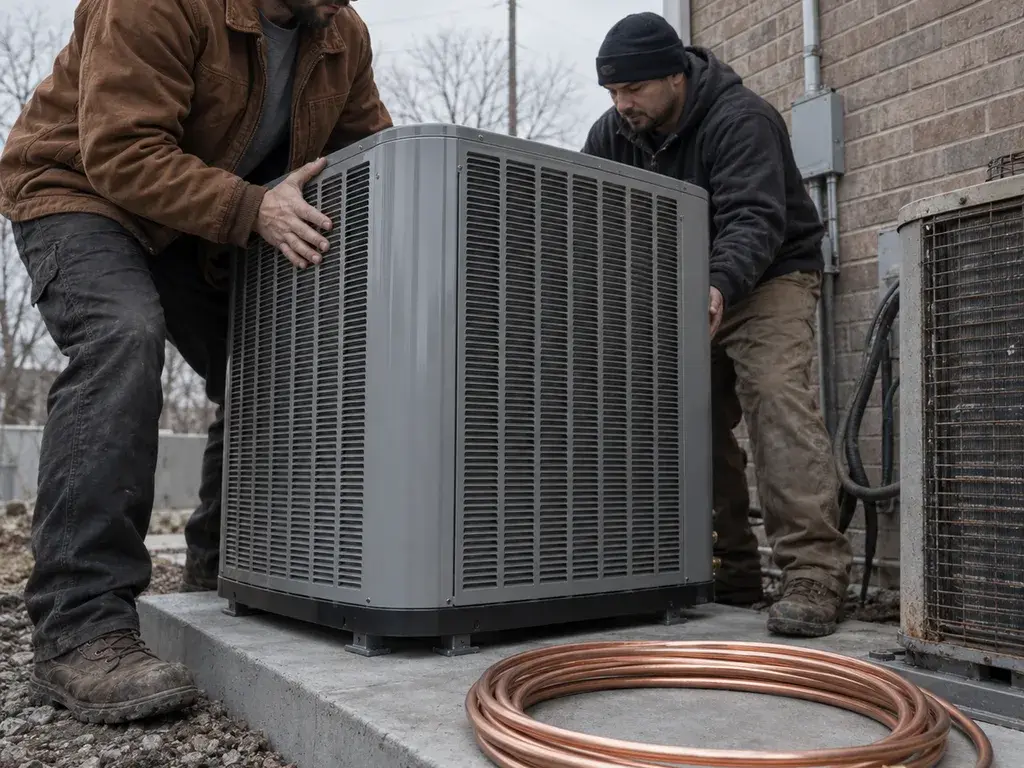
Cooling leads the year in Yukon, and the air conditioner ages accordingly. It runs from spring into autumn, and one season here puts on the hours that two or three seasons put on further north. The cooling half is usually the one that runs out first, while the heating side has taken far less wear.
That gap between the two halves is where a straight swap goes wrong. When a contractor replaces the outdoor unit and leaves the indoor coil, the pair stops being a pair: the two are rated together, a new outdoor unit against an old coil does not perform the way the rating says, and a mismatch can end the manufacturer's parts coverage on the new half. Since 1 January 2025 new residential equipment is no longer manufactured or imported factory-charged with R-410A — what ships is charged with R-454B or R-32 — and an outdoor unit built for those is not a listed match for a coil built for R-410A.
The other thing to settle early is when. A changeout usually takes about one day whichever month it happens in; what the month changes is how soon a contractor can find that day. In a climate where cooling leads the year, the weeks when nobody is asking anything of the air conditioner are few, and they are not the weeks a breakdown chooses.
Summer in Yukon comes in two kinds, and a replacement has to suit both. There are weeks when the air is heavy and the coil spends real time taking water out of it, and there are longer stretches when it is not and the job is temperature alone. A contractor sizes the equipment for the heavy weeks, which is right, and the system then spends most of its hours well below the load it was chosen for. June and September are where that shows: the temperature is mild, so the system barely runs, and the moisture has not gone anywhere — a house can sit damp in a month nobody would call hot. That is the thing to raise early, because what a system does on a mild wet day follows from what was ordered rather than from how anyone sets it afterwards.
Why air conditioners do not fix themselves
A working system does not consume refrigerant. A system that needed more of it in two different seasons has a leak nobody has located, and it will need more again. Each recharge buys one season, and on R-410A it buys that season for more than the last one, because the refrigerant is still made but under a shrinking national production allowance that steps down again in 2029, while the systems that need it stay in service.
What the leak costs is not only refrigerant. In most home systems the gas returning to the compressor is what cools it, so a system running undercharged runs its compressor hotter than it was built to run. That is the ordinary way a slow leak ends in a compressor failure, and a compressor failure takes the choice of timing away: the changeout then happens in the week the system picks rather than the week you do.
On a system charged with R-22 the arithmetic is sharper. Manufacture of new R-22 equipment stopped in 2010 and production and import of the refrigerant ended in 2020, so a technician recharging one now is putting back refrigerant reclaimed from another system. Recharging it is still lawful and still possible; it is simply the expensive kind of leak, and it is usually the one that ends the repair conversation.
What the store-bought fix actually does
The sealed can with a gauge on the top is the usual first move, and it deserves an honest answer. A system low on refrigerant does cool badly, and putting refrigerant into it does make it cool better for a while — that part is real. What the can cannot do is find the hole: refrigerant is not used up, so a system that is low is leaking, and the gap between cans gets shorter every time. The cans on the shelf beside the motor oil are charged for car systems, which use a different refrigerant from a home air conditioner, and the ones with a sealant in them add a second problem to the first — sealant can set in the metering device, and it fouls the recovery machine a technician has to connect.
The hard-start kit also does what it says, which is exactly what makes it misleading. It adds starting torque to a compressor that is struggling to start, and it can carry a system through a hot weekend. What it does not do is change why the compressor was struggling: worn bearings, tired windings, a failed run capacitor, or a voltage problem at the unit. A kit that has sat on a compressor for two seasons is propping up a machine that has been reporting something for two seasons.
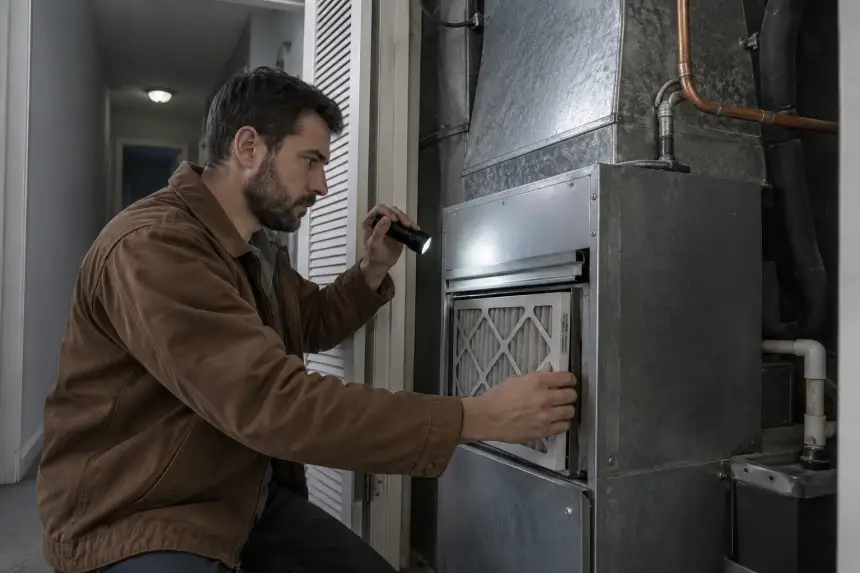
The filter is the exception on that shelf: it is not a repair pretending to be one, and it is worth being exact about what it reaches. A blocked filter starves the coil of air, the coil ices, and a coil that ices repeatedly sends liquid refrigerant back to the compressor — a real failure with an avoidable cause, and a clean filter removes that cause. What has already happened is beyond it: a compressor that has taken liquid, a coil that is iced now, or a charge that is low because the system is leaking. Ice that returns on a clean filter is not a filter problem at all, and at that point the filter has told you what it can.
When to stop and call
- You have had refrigerant added in two different seasons.
- You have read R-22 on the outdoor data plate, and the system is no longer holding the house.
- The compressor hums and then trips the breaker, and resetting it is the one thing you can do that makes it worse.
- Ice comes back on the line or the coil after you have put a clean filter in.
- Someone has told you to replace the system without having measured the house.
- The license
- Held by the contractor, not by this site, and issued where the work happens — Oklahoma licenses at state level, at city level or not at all depending on the trade and the town. Ask for the number and the name it is held under: a trading name and the licensed entity are often not the same.
- The figure
- Set by the contractor and said before the work starts. This site never quotes and has no part in it. If a technician cannot say what the visit covers before beginning, that is the moment to stop.
- The call
- Describing what the system is doing commits you to nothing. Nothing is booked until you say so.
- Coverage
- By town, not by region. Yukon and the towns around it, and it shifts with who is taking calls at the hour you ring.
What the visit involves
- 01
The diagnosis
At the thermostat first, then at the furnace or the condenser, in the order the equipment runs. What the system is doing is established before any part is named.
- 02
The finding, out loud
What failed, whether it is the fault or a symptom of another one, and whether the repair suits the age of the system. A diagnostic visit is usually charged separately from the repair — ask whether it is credited if the work goes ahead, because that differs from one contractor to the next.
- 03
The repair
Agreed with the contractor before it starts. Where a part has to be ordered, a technician says so rather than leaving the system apart.
- 04
What happens after
A system that failed once in a season often fails again in it. Whether that is the same fault or a second one is worth asking while the technician is still there.
What to have ready when you call
- 01Roughly when the system went in, and what refrigerant it is charged with — the model number is worth having in front of you too.
- 02Whether anyone has looked at the system this season, and what they said was wrong.
- 03What the system is doing now — not cooling at all, cooling weakly, running without ever stopping, tripping the breaker, or icing over.
- 04What else is in the cabinet with the indoor coil — a furnace, an air handler, nothing you can name — and whether it is the same age.
- 05The address and ZIP code, and what stands between the street and the outdoor unit — a locked gate or a dog in the yard changes the appointment.
Read the outdoor data plate before you call — the model number and the refrigerant are printed on it, and those two lines decide most of what follows.
Other services in Yukon
AC Replacement nearby