St. Marys, OH
AC Repair in St. Marys, OH
AC repair in St. Marys, OH begins with what the condenser outside is doing while the thermostat calls for cooling. The July dew point in St. Marys averages 64°F (PRISM 1991–2020 normals), so an air conditioner here removes moisture as well as heat. Half the homes in St. Marys were built before 1955 (Census ACS 2019–2023), so in many of them the heating and cooling equipment has been replaced at least once while the ducts and the flue have not. A system made before 2010 may run on R-22, which has not been produced or imported since January 1, 2020; one made from 2010 through 2024 most likely runs on R-410A, which new equipment stopped using on January 1, 2025.
(888) 217-3739Ohio contractors. No obligation for the call.
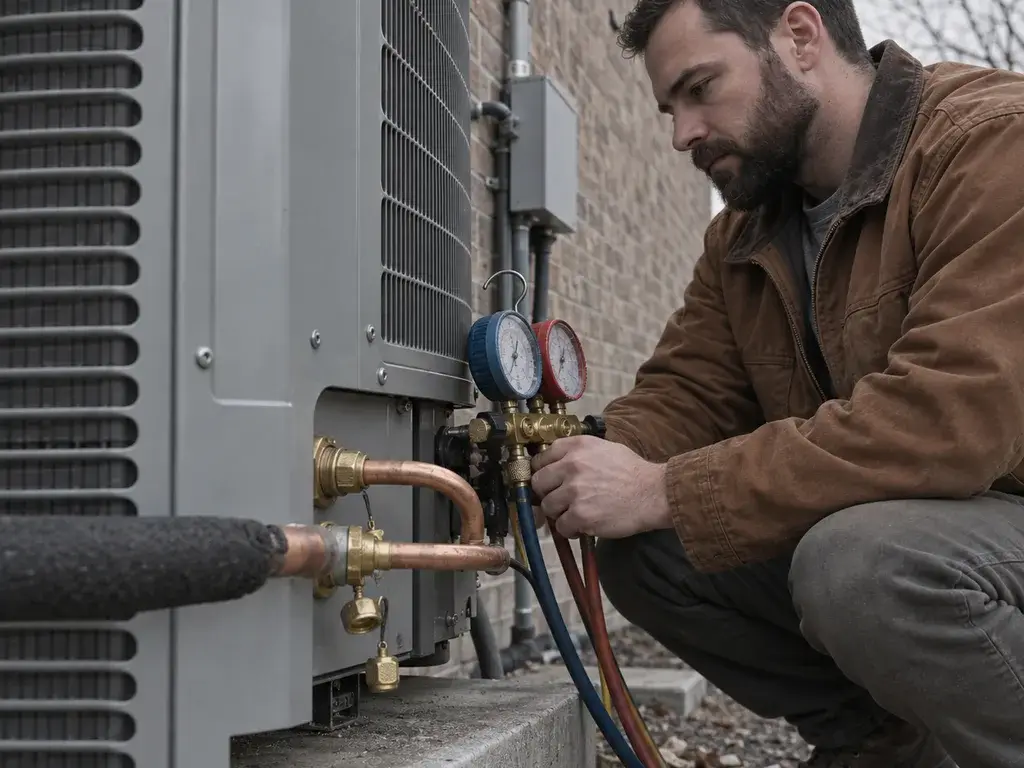
An air conditioner that runs without cooling and one that will not start at all are two different faults, and from the thermostat they look the same. Say which one it is and an independent contractor can come out to St. Marys and settle it at the unit rather than at the thermostat.
St. Marys works both halves of the system hard, and both of them age.
Where one blower and one set of ducts serve both seasons, which is the usual arrangement, the two systems are not really two machines, and that sorts a cooling fault before anyone opens anything. A house that heated normally through the winter and will not cool in July was running that shared half until spring, which points the question at the cooling side — the condenser, the contactor, the charge. A blower that had trouble through the winter points the other way, and the summer complaint is the second symptom rather than the first.
Summer here is humid without being tropical, so the AC works on both halves of the job at once: temperature, and the water in the air. Neither half leads, which is why the complaint itself is worth saying precisely on the phone. A house that gets down to the set temperature and still feels damp is reporting the water half: the charge, the amount of air crossing the coil, or a system that satisfies the thermostat before it has dried anything. A house that never reaches the set temperature at all on a hot afternoon is reporting capacity, and a technician goes after that with a different set of checks. Indoors the two sound like one complaint; at the coil they separate.
St. Marys, OH in numbers
| Days a year with a low of 32°F or colder | 116 | NOAA 1991–2020 normals, station 8 miles away |
|---|---|---|
| Days a year with a low of 20°F or colder | 42 | NOAA 1991–2020 normals |
| Average July dew point | 64°F | PRISM 1991–2020 normals |
| Median year homes were built | 1955 | Census ACS 2019–2023 |
| Households | 3,490 | Census ACS 2019–2023 |
| County | Auglaize County | Census Bureau |
| Federal minimum for a new split central AC | 13.4 SEER2 (North region) | DOE, 2023 standard |
Why ACs do not fix themselves
A system in good order does not use refrigerant up, so a charge that has to be topped up every season is leaving through a hole nobody has found. The oil travels out with the refrigerant: oil circulates with the refrigerant and lubricates the compressor, so a system running low runs hot and under-lubricated at the same time. Each recharge buys less than the one before it, and the part it is protecting gets closer to the end.
An AC tune-up before the summer
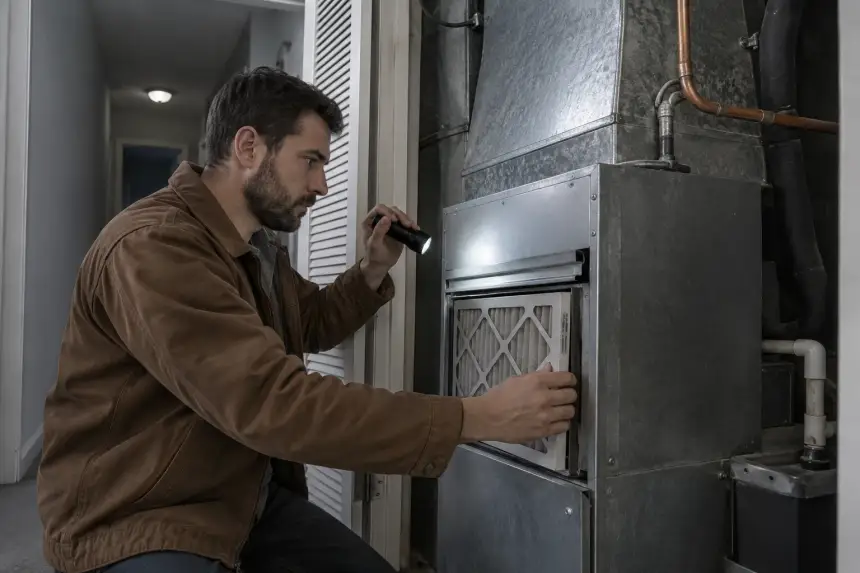
The time for an AC tune-up in St. Marys is before the first hot week, not during it, for the plain reason that every air conditioner in town gets its first hard test on the same afternoon. The parts that give out first — the run capacitor, the contactor, the condenser fan motor — wear through the months they spend idle as much as through the months they spend working.
Signs it is time to call
- The breaker has tripped more than once. Resetting it again is the response that makes it worse.
- There is ice on the copper line or on the indoor coil in hot weather.
- The outdoor unit hums but the fan does not turn.
- The license
- Held by the contractor, not by this site, and issued where the work happens — Ohio licenses at state level, at city level or not at all depending on the trade and the town. Ask for the number and the name it is held under: a trading name and the licensed entity are often not the same.
- The figure
- Set by the contractor and said before the work starts. This site never quotes and has no part in it. If a technician cannot say what the visit covers before beginning, that is the moment to stop.
- The call
- Describing what the system is doing commits you to nothing. Nothing is booked until you say so.
What the visit involves
- 01
The diagnosis
At the thermostat first, then at the furnace or the condenser, in the order the equipment runs. What the system is doing is established before any part is named.
- 02
The finding, out loud
What failed, whether it is the fault or a symptom of another one, and whether the repair suits the age of the system. A diagnostic visit is usually charged separately from the repair — ask whether it is credited if the work goes ahead, because that differs from one contractor to the next.
- 03
What happens after
A system that failed once in a season often fails again in it. Whether that is the same fault or a second one is worth asking while the technician is still there.
Before you call: what to have ready
- 01Which system it is: central air with a furnace, a heat pump, or a ductless mini-split.
- 02Roughly when it was installed, and what the outdoor data plate says it is charged with — R-22, R-410A, R-454B or R-32, printed on the metal label.
- 03Both thermostat numbers — what it is set to and what it is reading.
If there is ice anywhere on the system, switch the cooling off at the thermostat and leave the fan running: a technician cannot measure anything through a block of ice. A coil that has iced over takes a few hours to clear with the fan running, and about one day with the system off altogether — which is why the fan stays on.
AC Repair in St. Marys: questions
How humid are summers in St. Marys?
The July dew point in St. Marys averages 64°F, by the PRISM 1991–2020 climate normals. In air that wet an oversized air conditioner cools the house fast, shuts off before it has dried the air, and leaves rooms cool and clammy, which is why sizing starts with a load calculation for the house.
When were most houses in St. Marys built?
Half the homes in St. Marys were built before 1955, by the Census Bureau's 2019–2023 American Community Survey. Detached houses make up most of the housing. In houses that age the furnace or air conditioner has usually been replaced at least once, and the ducts and the flue are often older than the equipment.
Can a contractor in St. Marys still install an R-410A system?
Under federal rules, yes, if the equipment was made or imported before January 1, 2025: an EPA rule that took effect on July 27, 2026 removed the January 1, 2026 installation deadline for that stock. What has been made since January 1, 2025 runs on R-454B or R-32, and those outdoor units are not a listed match for a coil built for R-410A.
Other services in St. Marys
AC Repair nearby