Spur, TX
AC Replacement and Installation in Spur, TX
A new air conditioner in Spur, TX is matched to the house, to the indoor coil and to the refrigerant it will run on. The July dew point in Spur averages 61°F (PRISM 1991–2020 normals), so moisture is a smaller part of the cooling load here than heat. Half the homes in Spur were built before 1958 (Census ACS 2019–2023), so in many of them the heating and cooling equipment has been replaced at least once while the ducts and the flue have not. A split central air conditioner under 45,000 Btu/h installed in Texas today must rate at least 14.3 SEER2, the 2023 federal minimum for the Southeast.
(888) 217-3739Texas contractors. No obligation for the call.
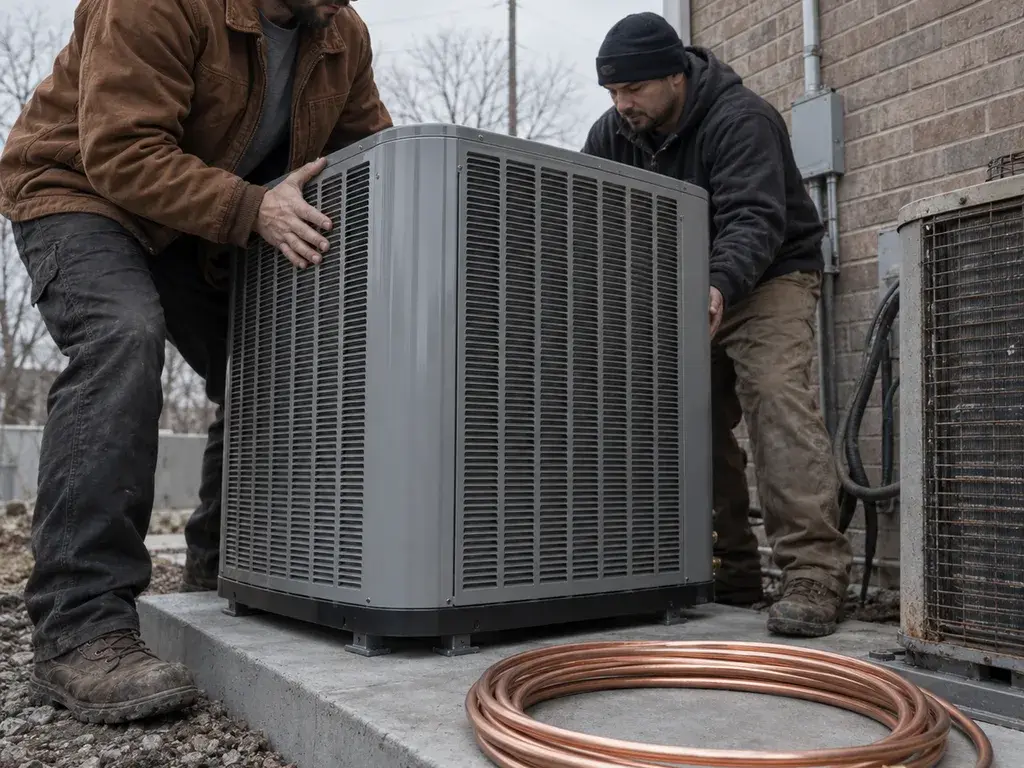
An air conditioner that no longer holds the house on a hot afternoon is not automatically finished, and what settles it is age, what failed, and what the system is charged with. Say roughly when it went in and what it is doing now, and an independent contractor can come out to Spur and size the replacement from the house rather than from the box being carried out.
Cooling, not heating, sets the year in Spur, and the air conditioner ages accordingly. It runs from spring into autumn, and one season here puts on the hours that two or three seasons put on further north. The cooling half usually reaches the end of its service life first, while the heating side has taken far less wear.
The asymmetry is where a straight swap goes wrong. When a contractor replaces the outdoor unit and leaves the indoor coil, the pair stops being a pair: the two are rated together, a new outdoor unit against an old coil does not perform the way the rating says, and a mismatch can end the manufacturer's parts coverage on the new half. Since 1 January 2025 new residential equipment is no longer manufactured or imported factory-charged with R-410A — what ships is charged with R-454B or R-32 — and an outdoor unit built for those is not a listed match for a coil built for R-410A.
Summer air in Spur is damp enough to matter on the worst afternoons and not much the rest of the time. What water the coil does take out is mostly water the house made — showers, cooking, laundry, the people in the rooms — rather than water drawn in from outside, and that load does not rise and fall with the weather. So the size of a replacement here follows the house: its volume, its windows, what the sun does to it in the afternoon, and how it is lived in. One consequence is worth knowing before a contractor says it out loud — a correctly sized replacement sometimes comes out below the number on the equipment it replaces, because nobody measured when that one went in. Smaller is not a downgrade: a system matched to the house runs longer and holds the temperature steadier than one that overshoots and stops.
Spur, TX in numbers
| Days a year with a low of 32°F or colder | 89 | NOAA 1991–2020 normals, station in or next to town |
|---|---|---|
| Days a year with a low of 20°F or colder | 17 | NOAA 1991–2020 normals |
| Average July dew point | 61°F | PRISM 1991–2020 normals |
| Median year homes were built | 1958 | Census ACS 2019–2023 |
| Households | 332 | Census ACS 2019–2023 |
| County | Dickens County | Census Bureau |
| Federal minimum for a new split central AC | 14.3 SEER2 under 45,000 Btu/h (Southeast) | DOE, 2023 standard |
Air conditioners do not fix themselves
A working system does not consume refrigerant. A system that needed more of it in two different seasons has a leak nobody has located, and it will need more again. Each recharge buys one season, and on R-410A it buys that season for more than the last one, because the refrigerant is still made but under a shrinking national production allowance that steps down again in 2029, while the systems that need it stay in service.
Signs it is time to call
- You have had refrigerant added in two different seasons.
- You have read R-22 on the outdoor data plate, and the system is no longer holding the house.
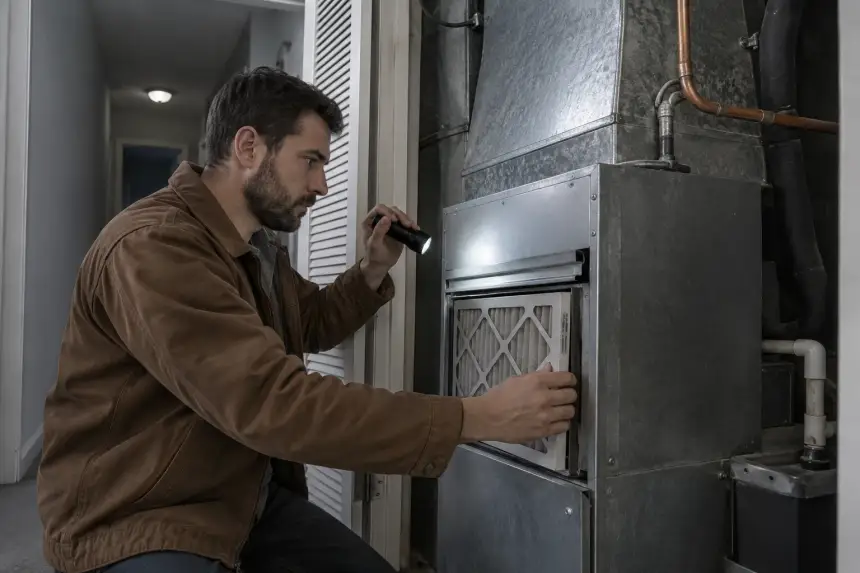
- Ice comes back on the line or the coil after you have put a clean filter in.
- The figure
- Set by the contractor and said before the work starts. This site never quotes and has no part in it. If a technician cannot say what the visit covers before beginning, that is the moment to stop.
- The call
- Describing what the system is doing commits you to nothing. Nothing is booked until you say so.
- Coverage
- By town, not by region. Spur and the towns around it, and it shifts with who is taking calls at the hour you ring.
What happens on the visit
- 01
The diagnosis
At the thermostat first, then at the furnace or the condenser, in the order the equipment runs. What the system is doing is established before any part is named.
- 02
The finding, out loud
What failed, whether it is the fault or a symptom of another one, and whether the repair suits the age of the system. A diagnostic visit is usually charged separately from the repair — ask whether it is credited if the work goes ahead, because that differs from one contractor to the next.
- 03
The repair
Agreed with the contractor before it starts. Where a part has to be ordered, a technician says so rather than leaving the system apart.
What to have ready when you call from Spur
- 01Roughly when the system went in, and what refrigerant it is charged with — the model number is worth having in front of you too.
- 02Whether the indoor coil shares a cabinet with a furnace or an air handler, and whether both went in on the same day.
- 03The address and ZIP code, and how a technician gets to the outdoor unit — a locked gate or a dog in the yard changes the appointment.
Read the outdoor data plate before you call — the model number and the refrigerant are printed on it, and those two lines decide most of what follows.
AC Replacement in Spur: questions
How humid are summers in Spur?
The July dew point in Spur averages 61°F, by the PRISM 1991–2020 climate normals. In air that dry most of the cooling load is heat, and an air conditioner removes little water, so sizing turns on the house and its sun more than on humidity.
How old are the homes in Spur?
Half the homes in Spur were built before 1958, by the Census Bureau's 2019–2023 American Community Survey. Detached houses make up almost all of the housing. In houses that age the furnace or air conditioner has usually been replaced at least once, and the ducts and the flue are often older than the equipment.
What efficiency does a new air conditioner need in Spur?
A new split central air conditioner in Spur falls under DOE's 2023 standard for the Southeast: at least 14.3 SEER2 below 45,000 Btu/h. In the Southeast the rule follows installation: a unit below the standard cannot be connected after January 1, 2023, whenever it was made.
Other services in Spur
AC Replacement nearby