Silt, CO
AC Replacement and Installation in Silt, CO
AC replacement in Silt, CO is sized from the house and its climate, not from the tonnage stamped on the old condenser. Silt has an average July dew point of 43°F (PRISM 1991–2020 normals), dry enough that nearly all of the cooling load is heat rather than moisture. Half the homes in Silt were built in 1997 or later (Census ACS 2019–2023). In Colorado, a split central air conditioner made since January 1, 2023 has to rate at least 13.4 SEER2, the federal minimum for the North region.
(888) 217-3739Colorado contractors. No obligation for the call.
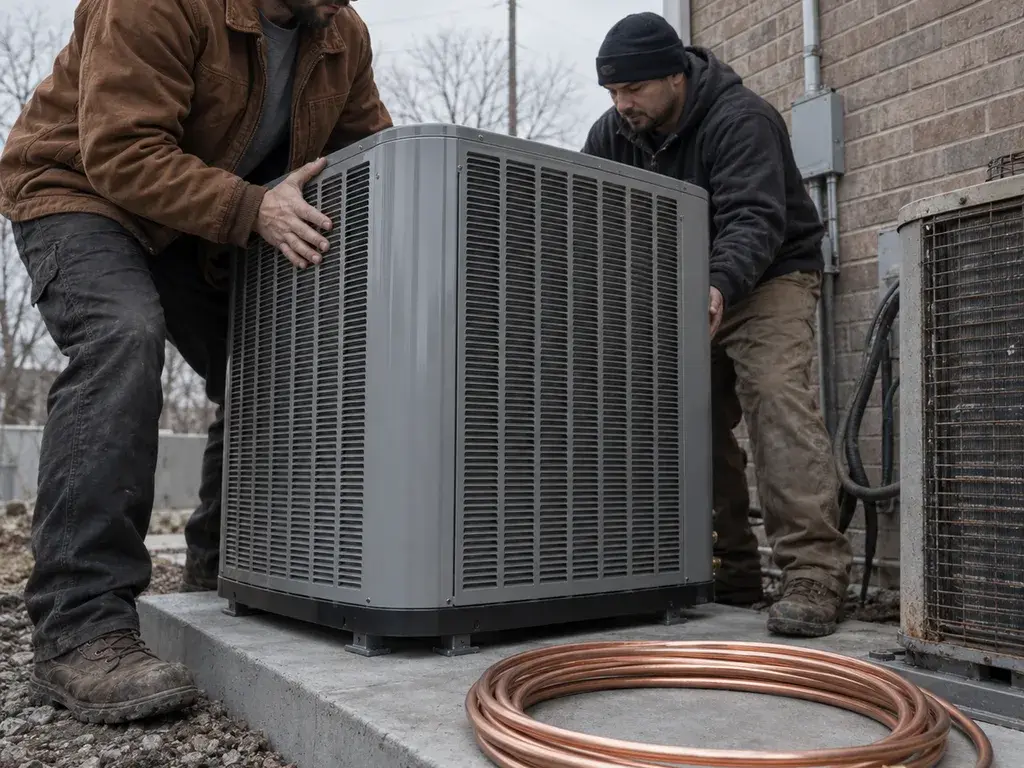
An air conditioner that no longer holds the house on a hot afternoon is not automatically finished, and what settles it is age, what failed, and what the system is charged with. Say what year the system went in and what it has started doing, and an independent contractor can come out to Silt and size the replacement from the house rather than from the box being carried out.
In a climate like this the refrigerant question usually arrives before wear does. A system installed before about 2010 may be charged with R-22: manufacture of new R-22 equipment stopped in 2010, and production and import of the refrigerant itself ended in 2020. A system charged with R-410A sits differently, because it stays lawful to run, service, repair and recharge, and no end date is attached to that. What did change is what a new system arrives charged with: since 1 January 2025 new residential equipment is no longer manufactured or imported factory-charged with R-410A, and what ships now is charged with R-454B or R-32 instead.
The other half of the decision is usually in the same cabinet. Where a furnace and the indoor coil share one, they almost always went in on the same day, and a changeout that replaces one and leaves the other means a contractor opens that cabinet twice. A changeout usually takes about one day, and a heating climate leaves eight months in which that day is not an emergency.
The outdoor unit is the same box either way, so the choice between an air conditioner and a heat pump arrives with the replacement rather than later. The nights that decide it are the ones below 20°F, and there are enough of them here to plan for: a heat pump hands the work to electric resistance strips once the outdoor temperature drops far enough, and the electric bill in a cold snap follows whichever of the two is doing the work. The temperature at which the strips take over is a property of the installed system rather than of heat pumps, and a contractor can say what it will be beforehand. Ask what is meant to carry the house through the coldest nights — strips, an existing furnace, or a second stage — and put the question before the contractor picks the model.
Silt, CO in numbers
| Days a year with a low of 32°F or colder | 202 | NOAA 1991–2020 normals, station 4 miles away |
|---|---|---|
| Days a year with a low of 20°F or colder | 107 | NOAA 1991–2020 normals |
| Average July dew point | 43°F | PRISM 1991–2020 normals |
| Median year homes were built | 1997 | Census ACS 2019–2023 |
| Households | 1,273 | Census ACS 2019–2023 |
| County | Garfield County | Census Bureau |
| Federal minimum for a new split central AC | 13.4 SEER2 (North region) | DOE, 2023 standard |
Why air conditioners do not fix themselves
A working system does not consume refrigerant. A system that needed more of it in two different seasons has a leak nobody has located, and it will need more again. Each recharge buys one season, and on R-410A it buys that season for more than the last one, because the refrigerant is still made but under a shrinking national production allowance that steps down again in 2029, while the systems that need it stay in service.
Signs it is time to call
- You have had refrigerant added in two different seasons.
- The compressor hums and then trips the breaker, and resetting it is the one thing you can do that makes it worse.
- Someone has told you to replace the system without having measured the house.
- The license
- Held by the contractor, not by this site, and issued where the work happens — Colorado licenses at state level, at city level or not at all depending on the trade and the town. Ask for the number and the name it is held under: a trading name and the licensed entity are often not the same.
- The call
- Describing what the system is doing commits you to nothing. Nothing is booked until you say so.
- Coverage
- By town, not by region. Silt and the towns around it, and it shifts with who is taking calls at the hour you ring.
What happens on the visit
- 01
The diagnosis
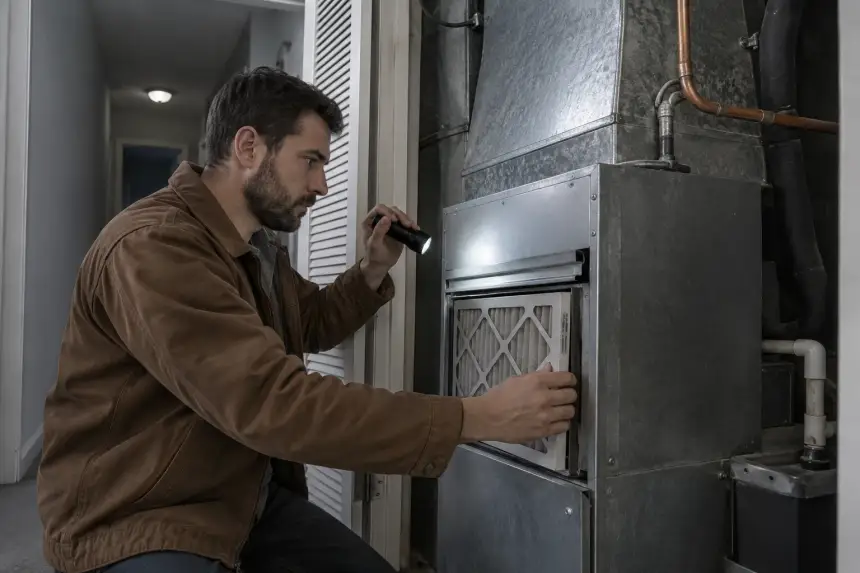
At the thermostat first, then at the furnace or the condenser, in the order the equipment runs. What the system is doing is established before any part is named.
- 02
The finding, out loud
What failed, whether it is the fault or a symptom of another one, and whether the repair suits the age of the system. A diagnostic visit is usually charged separately from the repair — ask whether it is credited if the work goes ahead, because that differs from one contractor to the next.
- 03
The repair
Agreed with the contractor before it starts. Where a part has to be ordered, a technician says so rather than leaving the system apart.
What to have ready when you call from Silt
- 01Roughly when the system went in, and what refrigerant it is charged with — the model number is worth having in front of you too.
- 02Whether anyone has looked at the system this season, and what they said was wrong.
- 03What happens when the system runs — not cooling at all, cooling weakly, running without ever stopping, tripping the breaker, or icing over.
Read the outdoor data plate before you call — the model number and the refrigerant are printed on it, and those two lines decide most of what follows.
AC Replacement in Silt: questions
What is the July dew point in Silt?
The July dew point in Silt averages 43°F, by the PRISM 1991–2020 climate normals. In air that dry most of the cooling load is heat, and an air conditioner removes little water, so sizing turns on the house and its sun more than on humidity.
When were most houses in Silt built?
Half the homes in Silt were built in 1997 or later, by the Census Bureau's 2019–2023 American Community Survey. Detached houses make up most of the housing. Equipment in houses of that age is often on its second set, and the install date on the label decides whether parts are still made. Manufactured homes are common enough here that a packaged unit outside, feeding a duct under the floor, is worth mentioning on the call.
Does the federal tax credit still cover a new air conditioner in Silt?
No. The 25C energy efficient home improvement credit ended for equipment installed after December 31, 2025, under the tax law signed on July 4, 2025. A quote that still counts it is out of date; a utility or state rebate is a separate program, and the contractor or the utility can say whether one applies.
Other services in Silt
AC Replacement nearby