Sawpit, CO
Ductwork and Airflow in Sawpit, CO
Ductwork in Sawpit, CO decides whether a furnace or air conditioner delivers what it is rated for, room by room. The July dew point in Sawpit averages 38°F (PRISM 1991–2020 normals), dry enough that nearly all of the cooling load is heat rather than moisture. Under the 2021 International Energy Conservation Code, a new duct system may leak no more than 4 cubic feet of air a minute per 100 square feet of floor area at the post-construction test, where the state or town has adopted that edition.
(888) 217-3739Colorado contractors. No obligation for the call.
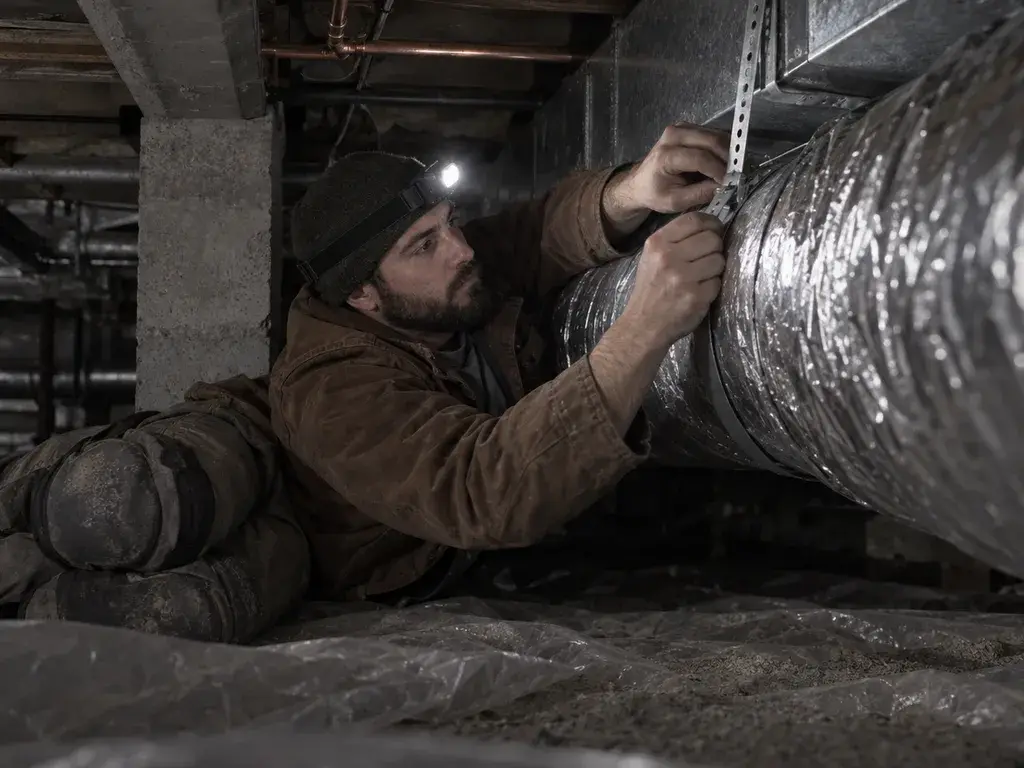
A room that never gets comfortable while the rest of the house is fine is usually a duct problem rather than an equipment problem. Name the room, and whether it happens in heating or in cooling, and an independent contractor can come out to Sawpit and measure the airflow instead of guessing at it.
A run that crosses an unheated attic or a vented crawl space carries the warmest air in the house through the coldest air on the property, and the gap is at its widest on the coldest night of the year — the night the far bedroom gets judged. Where the heat comes off a furnace, the supply air is around 120°F to 140°F and the space the run crosses is below freezing. A joint leaks the same amount in October as it does in January; what changes is how much heat leaves with it.
Where the runs sit inside a heated basement, a leaking joint gives most of its heat back to the house. The same joint in an unheated attic or a vented crawl space sends it outdoors instead, and it does that every hour of a season this long. Which of the two a house has decides whether a duct leak costs comfort or costs money, and where the runs go is worth saying on the phone.
Here the July dew point sits below the temperature of the air inside a supply run, so a poorly insulated attic run warms what it carries rather than dripping on what is under it. What a leaking return does instead is carry dust. It draws attic or crawl space air into the system, and the filter only catches what came through it, which is why a house that is kept clean can still have a black filter and gray register faces. The measurement is cleaner in dry air too: with almost nothing going into moisture, the temperature split across the coil reads as airflow and little else, and one reading separates a duct problem from an equipment problem.
Sawpit, CO in numbers
| Days a year with a low of 32°F or colder | 202 | NOAA 1991–2020 normals, station 3 miles away |
|---|---|---|
| Days a year with a low of 20°F or colder | 102 | NOAA 1991–2020 normals |
| Average July dew point | 38°F | PRISM 1991–2020 normals |
| Households | 4 | Census ACS 2019–2023 |
| County | San Miguel County | Census Bureau |
| Federal minimum for a new split central AC | 13.4 SEER2 (North region) | DOE, 2023 standard |
Why duct problems in Sawpit do not fix themselves
The cold room is the symptom people call about, and it is the smaller half of the problem. A restricted return or a collapsed run raises the pressure the blower has to work against, and the blower works against it every hour the system runs — in the rooms that are fine as much as in the room that is not.
When to stop and call
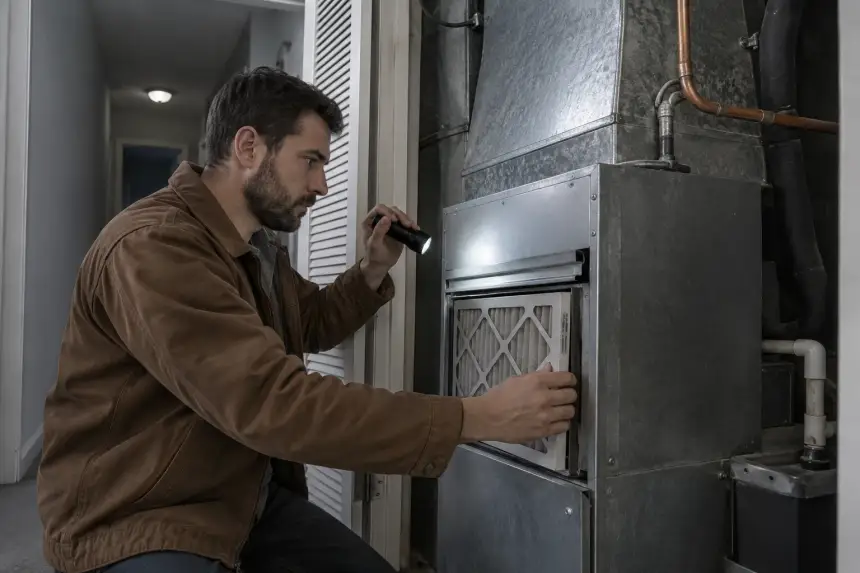
- The filter is clean, every register is open, and one room is still wrong.
- A return grille whistles or roars, or the filter bows inward when the blower starts.
- There is a stain on a ceiling under a duct run, or duct insulation that is wet to the touch.
- The license
- Held by the contractor, not by this site, and issued where the work happens — Colorado licenses at state level, at city level or not at all depending on the trade and the town. Ask for the number and the name it is held under: a trading name and the licensed entity are often not the same.
- The figure
- Set by the contractor and said before the work starts. This site never quotes and has no part in it. If a technician cannot say what the visit covers before beginning, that is the moment to stop.
- The call
- Describing what the system is doing commits you to nothing. Nothing is booked until you say so.
What a visit in Sawpit involves
- 01
The finding, out loud
What failed, whether it is the fault or a symptom of another one, and whether the repair suits the age of the system. A diagnostic visit is usually charged separately from the repair — ask whether it is credited if the work goes ahead, because that differs from one contractor to the next.
- 02
The repair
Agreed with the contractor before it starts. Where a part has to be ordered, a technician says so rather than leaving the system apart.
- 03
What happens after
A system that failed once in a season often fails again in it. Whether that is the same fault or a second one is worth asking while the technician is still there.
Before you call: what to have ready
- 01Which rooms are weak, and whether it happens in heating, in cooling, or in both — that one answer narrows it before anybody arrives.
- 02Which part of the house the duct crosses: a basement, a vented crawl space, an attic, or none of those because it all runs inside.
- 03What the system is — furnace, heat pump, or a furnace with cooling added — and roughly what year it went in, and whether the installer replaced the duct with it or left it in place.
Leave the registers and dampers where they are before the visit — a technician measures the system as it actually runs, and one damper moved this morning shifts every reading this afternoon.
Ductwork in Sawpit: questions
What is the July dew point in Sawpit?
The July dew point in Sawpit averages 38°F, by the PRISM 1991–2020 climate normals. In air that dry most of the cooling load is heat, and an air conditioner removes little water, so sizing turns on the house and its sun more than on humidity.
How efficient must a new air conditioner in Sawpit be?
A new split central air conditioner in Sawpit falls under DOE's 2023 standard for the North: at least 13.4 SEER2. The North rule goes by the date a unit was made, so one built before 2023 to the old standard may still go in.