Sage Creek Colony, MT
AC Replacement and Installation in Sage Creek Colony, MT
AC replacement in Sage Creek Colony, MT is sized from the house and its climate, not from the tonnage stamped on the old condenser. The July dew point in Sage Creek Colony averages 47°F (PRISM 1991–2020 normals), dry enough that nearly all of the cooling load is heat rather than moisture. Montana falls in DOE's North region, where a split central air conditioner made since January 1, 2023 must rate at least 13.4 SEER2.
(888) 217-3739Montana contractors. No obligation for the call.
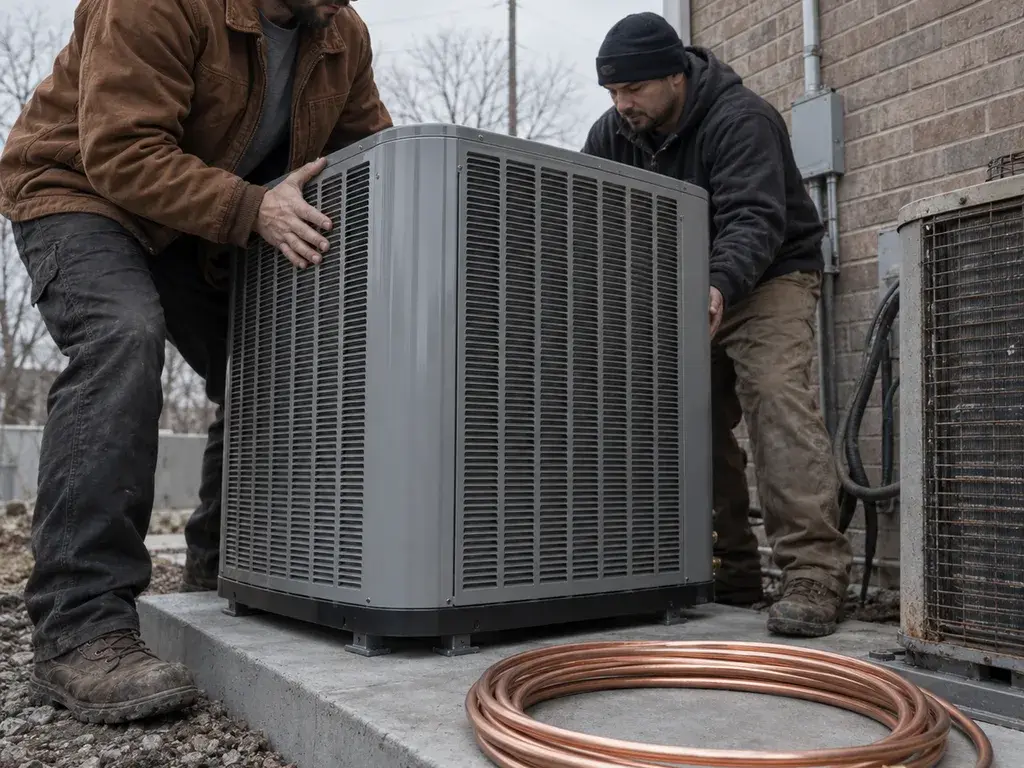
An air conditioner that gives up on a hot afternoon has not automatically reached the end of its life, and what settles it is age, what failed, and what the system is charged with. Say what year the system went in and what it has started doing, and an independent contractor can come out to Sage Creek Colony and size the replacement from the house rather than from the box being carried out.
The cooling season in Sage Creek Colony is short, and that is what makes the age of an air conditioner misleading. A system that cools for ten or twelve weeks a year puts on a fraction of the running hours the same model accumulates in the south, so it can still be cooling years after the date on the equipment suggested it would stop.
The other half of the decision is usually in the same cabinet. Where a furnace and the indoor coil share one, they almost always went in on the same day, and a changeout that replaces one and leaves the other means a contractor opens that cabinet twice. A changeout usually takes about one day, and a heating climate leaves eight months in which that day is not an emergency.
The summer air in Sage Creek Colony holds so little water that dropping the temperature is nearly the whole job, and the same oversizing error has the opposite consequence. Nothing goes clammy, because there was little moisture to remove; what happens instead is short cycling — the AC reaches the setting almost as soon as it starts, stops, the temperature climbs back, and it starts again. Starting is the hard part of a compressor's day, so a system that starts several times an hour wears the contactor and the compressor rather than the season. A technician sizing a replacement here also expects a wider temperature split across the coil, because nearly all of the capacity goes into temperature and almost none of it into water.
Sage Creek Colony, MT in numbers
| Days a year with a low of 32°F or colder | 202 | NOAA 1991–2020 normals, station 18 miles away |
|---|---|---|
| Days a year with a low of 20°F or colder | 118 | NOAA 1991–2020 normals |
| Average July dew point | 47°F | PRISM 1991–2020 normals |
| Households | 2 | Census ACS 2019–2023 |
| County | Liberty County | Census Bureau |
| Federal minimum for a new split central AC | 13.4 SEER2 (North region) | DOE, 2023 standard |
Before you try the store-bought fix
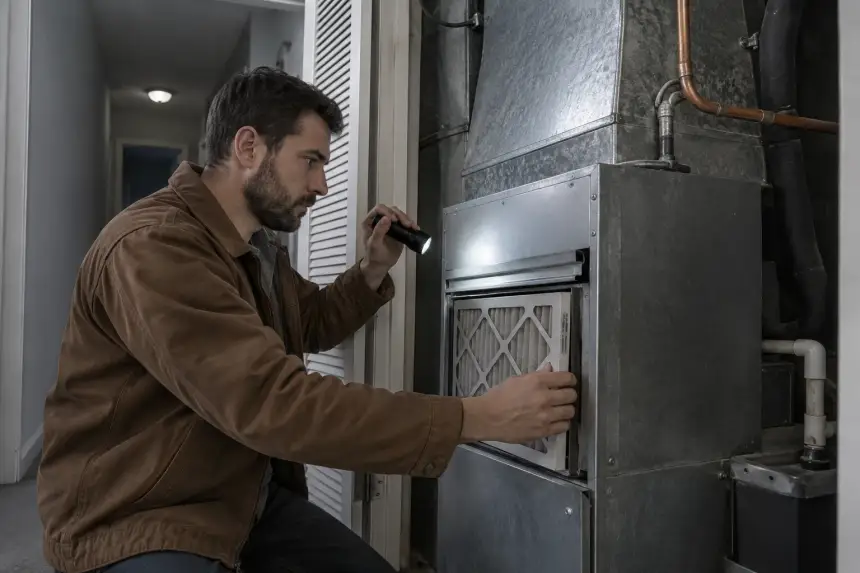
A new filter is the one item on that shelf that is not a repair pretending to be one, and it is worth being exact about what it reaches. A blocked filter starves the coil of air, the coil ices, and a coil that ices repeatedly sends liquid refrigerant back to the compressor — a real failure with an avoidable cause, and a clean filter removes that cause. What it does not reach is what has already happened: a compressor that has taken liquid, a coil that is iced now, or a charge that is low because the system is leaking. Ice that returns on a clean filter is not a filter problem at all, and at that point the filter has told you what it can.
Signs it is time to call
- You have read R-22 on the outdoor data plate, and the system is no longer holding the house.
- Ice comes back on the line or the coil after you have put a clean filter in.
- Someone has told you to replace the system without having measured the house.
- The figure
- Set by the contractor and said before the work starts. This site never quotes and has no part in it. If a technician cannot say what the visit covers before beginning, that is the moment to stop.
- The call
- Describing what the system is doing commits you to nothing. Nothing is booked until you say so.
- Coverage
- By town, not by region. Sage Creek Colony and the towns around it, and it shifts with who is taking calls at the hour you ring.
What happens on the visit
- 01
The finding, out loud
What failed, whether it is the fault or a symptom of another one, and whether the repair suits the age of the system. A diagnostic visit is usually charged separately from the repair — ask whether it is credited if the work goes ahead, because that differs from one contractor to the next.
- 02
The repair
Agreed with the contractor before it starts. Where a part has to be ordered, a technician says so rather than leaving the system apart.
- 03
What happens after
A system that failed once in a season often fails again in it. Whether that is the same fault or a second one is worth asking while the technician is still there.
What to have ready when you call
- 01Roughly what year it was installed, and which refrigerant it runs on — the model number is worth having in front of you too.
- 02Whether the indoor coil shares a cabinet with a furnace or an air handler, and whether both went in on the same day.
- 03The address and ZIP code, and what stands between the street and the outdoor unit — a locked gate or a dog in the yard changes the appointment.
Find the outdoor data plate and read it before you call — the model number and the refrigerant are printed on it, and those two lines decide most of what follows.
AC Replacement in Sage Creek Colony: questions
How humid are summers in Sage Creek Colony?
The July dew point in Sage Creek Colony averages 47°F, by the PRISM 1991–2020 climate normals. In air that dry most of the cooling load is heat, and an air conditioner removes little water, so sizing turns on the house and its sun more than on humidity.
What efficiency does a new air conditioner need in Sage Creek Colony?
Montana is in DOE's North region, where a split central air conditioner under the 2023 standard has to rate at least 13.4 SEER2. The North rule goes by the date a unit was made, so one built before 2023 to the old standard may still go in.
Other services in Sage Creek Colony
AC Replacement nearby