Red Cliff, CO
AC Replacement and Installation in Red Cliff, CO
A new air conditioner in Red Cliff, CO is matched to the house, to the indoor coil and to the refrigerant it will run on. The July dew point in Red Cliff averages 37°F (PRISM 1991–2020 normals), dry enough that nearly all of the cooling load is heat rather than moisture. Half the homes in Red Cliff were built before 1971 (Census ACS 2019–2023). The federal floor for a split central air conditioner made since January 1, 2023 and sold for Colorado is 13.4 SEER2, the North region's standard.
(888) 217-3739Colorado contractors. No obligation for the call.
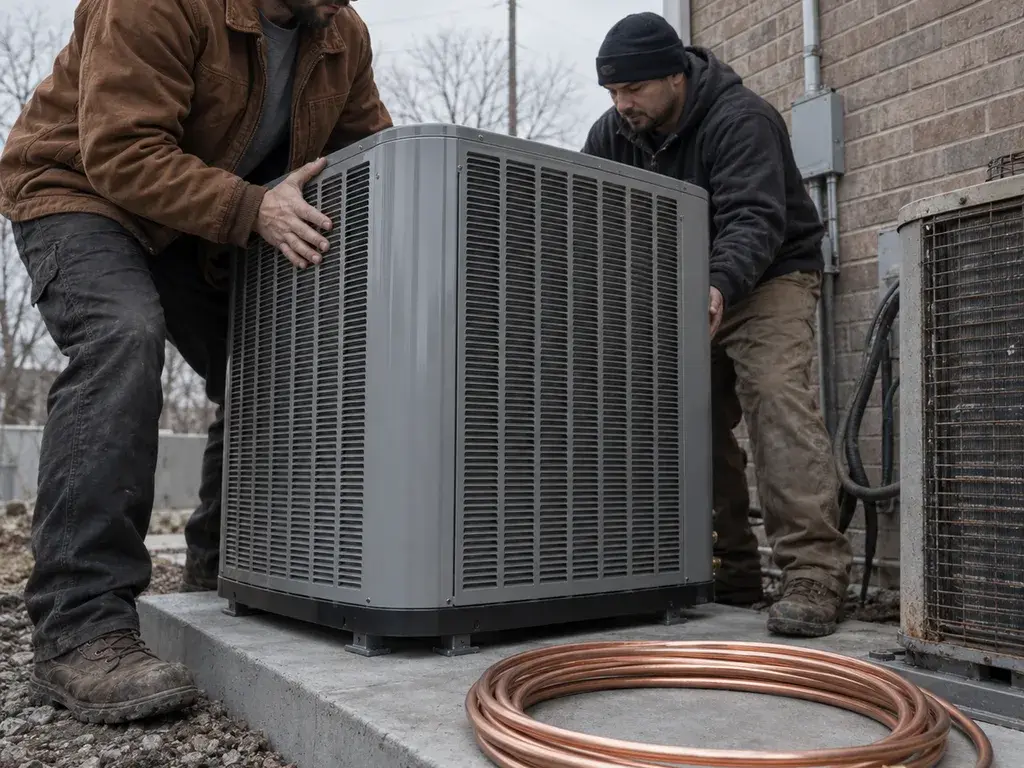
An air conditioner that gives up on a hot afternoon has not automatically reached the end of its life, and what settles it is age, what failed, and what the system is charged with. Say roughly when it went in and what it is doing now, and an independent contractor can come out to Red Cliff and size the replacement from the house rather than from the box being carried out.
What arrives first in a climate like this is the refrigerant question rather than wear. A system installed before about 2010 may be charged with R-22: manufacture of new R-22 equipment stopped in 2010, and production and import of the refrigerant itself ended in 2020. A system charged with R-410A sits differently, because it stays lawful to run, service, repair and recharge, and no end date is attached to that. What did change is what a new system arrives charged with: since 1 January 2025 new residential equipment is no longer manufactured or imported factory-charged with R-410A, and what ships now is charged with R-454B or R-32 instead.
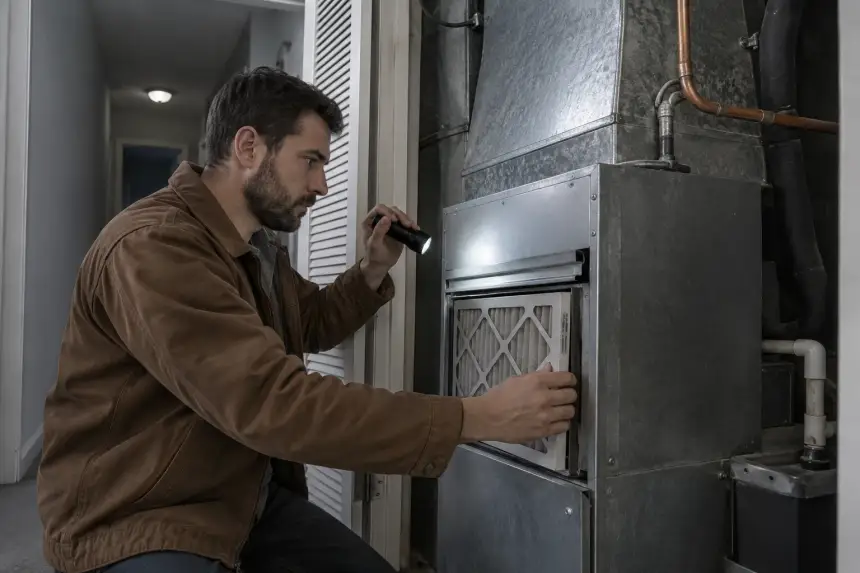
The other half of the decision is usually in the same cabinet. Where a furnace and the indoor coil share one, they almost always went in on the same day, and a changeout that replaces one and leaves the other means a contractor opens that cabinet twice. A changeout usually takes about one day, and a heating climate leaves eight months in which that day is not an emergency.
The summer air in Red Cliff holds so little water that dropping the temperature is nearly the whole job, and the same oversizing error has the opposite consequence. Nothing goes clammy, because there was little moisture to remove; what happens instead is short cycling — the AC reaches the setting almost as soon as it starts, stops, the temperature climbs back, and it starts again. A compressor works hardest at the moment it starts, so a system that starts several times an hour wears the contactor and the compressor rather than the season. A technician sizing a replacement here also expects a wider temperature split across the coil, because nearly all of the capacity goes into temperature and almost none of it into water.
Red Cliff, CO in numbers
| Days a year with a low of 32°F or colder | 248 | NOAA 1991–2020 normals, station 9 miles away |
|---|---|---|
| Days a year with a low of 20°F or colder | 137 | NOAA 1991–2020 normals |
| Average July dew point | 37°F | PRISM 1991–2020 normals |
| Median year homes were built | 1971 | Census ACS 2019–2023 |
| Households | 122 | Census ACS 2019–2023 |
| County | Eagle County | Census Bureau |
| Federal minimum for a new split central AC | 13.4 SEER2 (North region) | DOE, 2023 standard |
What the hardware-store fix does and does not do
The sealed can with a gauge on the top is the usual first move, and it deserves an honest answer. A system low on refrigerant does cool badly, and putting refrigerant into it does make it cool better for a while — that part is real. What the can cannot do is find the hole: refrigerant is not used up, so a system that is low is leaking, and the gap between cans gets shorter every time. The cans on the shelf beside the motor oil are charged for car systems, which use a different refrigerant from a home air conditioner, and the ones with a sealant in them add a second problem to the first — sealant can set in the metering device, and it fouls the recovery machine a technician has to connect.
When to stop and call
- You have had refrigerant added in two different seasons.
- You have read R-22 on the outdoor data plate, and the system is no longer holding the house.
- The compressor hums and then trips the breaker, and resetting it is the one thing you can do that makes it worse.
- The figure
- Set by the contractor and said before the work starts. This site never quotes and has no part in it. If a technician cannot say what the visit covers before beginning, that is the moment to stop.
- The call
- Describing what the system is doing commits you to nothing. Nothing is booked until you say so.
- Coverage
- By town, not by region. Red Cliff and the towns around it, and it shifts with who is taking calls at the hour you ring.
What the visit involves
- 01
The diagnosis
At the thermostat first, then at the furnace or the condenser, in the order the equipment runs. What the system is doing is established before any part is named.
- 02
The finding, out loud
What failed, whether it is the fault or a symptom of another one, and whether the repair suits the age of the system. A diagnostic visit is usually charged separately from the repair — ask whether it is credited if the work goes ahead, because that differs from one contractor to the next.
- 03
The repair
Agreed with the contractor before it starts. Where a part has to be ordered, a technician says so rather than leaving the system apart.
Before you call: what to have ready
- 01Roughly what year it was installed, and which refrigerant it runs on — the model number is worth having in front of you too.
- 02What the system is doing now — not cooling at all, cooling weakly, running without ever stopping, tripping the breaker, or icing over.
- 03What else is in the cabinet with the indoor coil — a furnace, an air handler, nothing you can name — and whether it is the same age.
Find the outdoor data plate and read it before you call — the model number and the refrigerant are printed on it, and those two lines decide most of what follows.
AC Replacement in Red Cliff: questions
What is the July dew point in Red Cliff?
The July dew point in Red Cliff averages 37°F, by the PRISM 1991–2020 climate normals. In air that dry most of the cooling load is heat, and an air conditioner removes little water, so sizing turns on the house and its sun more than on humidity.
How old are the homes in Red Cliff?
Half the homes in Red Cliff were built before 1971, by the Census Bureau's 2019–2023 American Community Survey. Detached houses make up almost all of the housing. Equipment in houses of that age is often on its second set, and the install date on the label decides whether parts are still made. Manufactured homes are common enough here that a packaged unit outside, feeding a duct under the floor, is worth mentioning on the call.
Does the federal tax credit still cover a new air conditioner in Red Cliff?
No. The 25C energy efficient home improvement credit ended for equipment installed after December 31, 2025, under the tax law signed on July 4, 2025. A quote that subtracts it is out of date, and any utility or state rebate is a separate program to ask the utility about.
Other services in Red Cliff
AC Replacement nearby