Deschutes County, OR
Heating and AC Repair in Pronghorn
The houses in Pronghorn are newer than most, and a newer house needs less heating and cooling than the equipment usually installed in it. A tight envelope changes the arithmetic of sizing, and the common fault here is a system too large rather than too small.
(888) 217-3739Oregon contractors. No obligation for the call.
An oversized air conditioner cools the air without drying it. It reaches the thermostat setting in a few minutes of running, shuts off, and never runs long enough to pull moisture out — the house reads the right number and feels wrong. The complaint is comfort; the cause is sizing.
Sealed combustion changed what can be left alone. A modern furnace takes its air from outside through one pipe and vents through a second, and those pipes have terminations that block: a nest, a drift, a screen packed with lint. A system that will not start on the first cold morning is often telling you about the outside of the wall rather than anything inside it.
What is the system doing?
Each of these is a different call, and which one it is decides what happens next in Pronghorn. Pick the closest.
- The license
- Held by the contractor, not by this site, and issued where the work happens — Oregon licenses at state level, at city level or not at all depending on the trade and the town. Ask for the number and the name it is held under: a trading name and the licensed entity are often not the same.
- The figure
- Set by the contractor and said before the work starts. This site never quotes and has no part in it. If a technician cannot say what the visit covers before beginning, that is the moment to stop.
- The call
- Describing what the system is doing commits you to nothing. Nothing is booked until you say so.
- Coverage
- By town, not by region. Pronghorn and the towns around it, and it shifts with who is taking calls at the hour you ring.
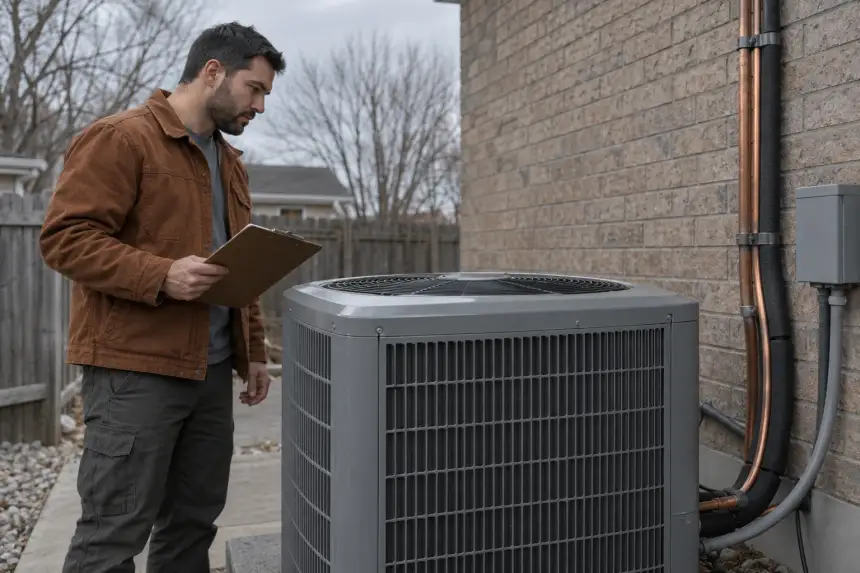
Describing it on the phone costs nothing
Nothing is booked until you say so. What a technician needs first is what the system is doing, how long it has been doing it, and roughly when the equipment went in — that last one changes the answer more than anything else you can tell them, because it decides whether the part is still made.