Poydras, LA
Furnace Replacement in Poydras
A furnace that has failed once and a furnace on its second service call this season are two different questions. Say roughly when it was installed and what it is doing, and a heating contractor can come out to Poydras and answer that before anything is ordered.
(888) 217-3739Louisiana contractors. No obligation for the call.
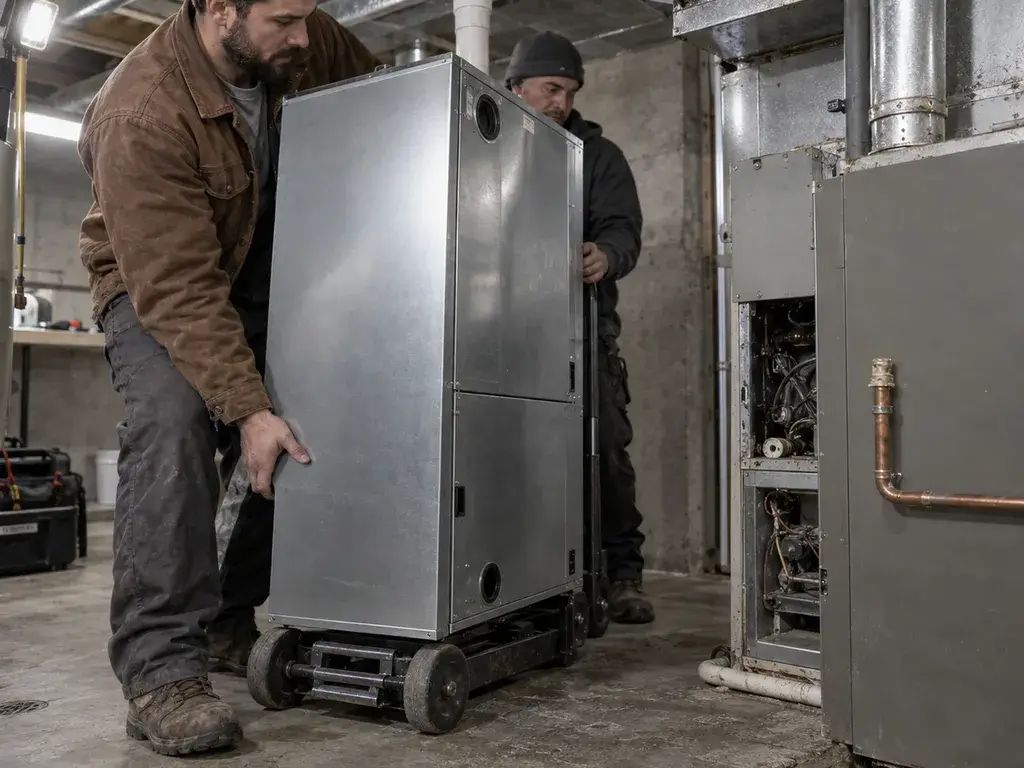
A furnace in Poydras works a few weeks of the year, and some years barely that. The calendar comes out of the decision first: a changeout takes about one day, and a day without heat here is an inconvenience rather than a risk. So the timing follows the appliance instead of the other way around.
Low hours change the way a furnace ends rather than whether it ends. A furnace here stands still more than it runs: a flue that never gets hot enough to dry itself out, condensate sitting in a trap through a warm winter, corrosion working on the burners from the outside in. Corrosion reaches the heat exchanger before cycling would have, and the ending is the same one.
The indoor cabinet is not the same thing from one house to the next here: a small gas furnace in a closet or out in the garage in one, an air handler with electric resistance strips behind a heat pump in the next. The model number on the data plate settles which, and it settles what the visit is — a furnace changeout and an air handler changeout are not the same piece of work.
The blower comes with the furnace, and it runs in July as well as in January, which makes a changeout here a cooling decision as much as a heating one. In July most of the work is water rather than temperature: a system that cools the air fast, shuts down and leaves the house cold and sticky never ran long enough to dehumidify. The question worth asking is what the new blower does at part load, because one that holds a lower airflow for a longer cycle takes more water out of the same house.
Why furnaces do not fix themselves
A cracked heat exchanger does not stay the size it was when somebody found it. Every heating cycle opens it further, because heat moves the steel and the crack is where that movement collects.
The air on the other side of that steel is what the blower sends into the house. That is why nobody watches a heat exchanger to see what it does next, and why a carbon monoxide alarm belongs on the same floor as the furnace while the question is still open.
Money spent on an old furnace does not move across to the new one. A large repair on an appliance installed before 2010 buys months rather than years — and if the fault turns out to be the heat exchanger, the gas utility takes the timing out of it altogether: it closes the supply, and the supply comes back only after a licensed contractor has worked on the appliance.
What the store-bought fix actually does
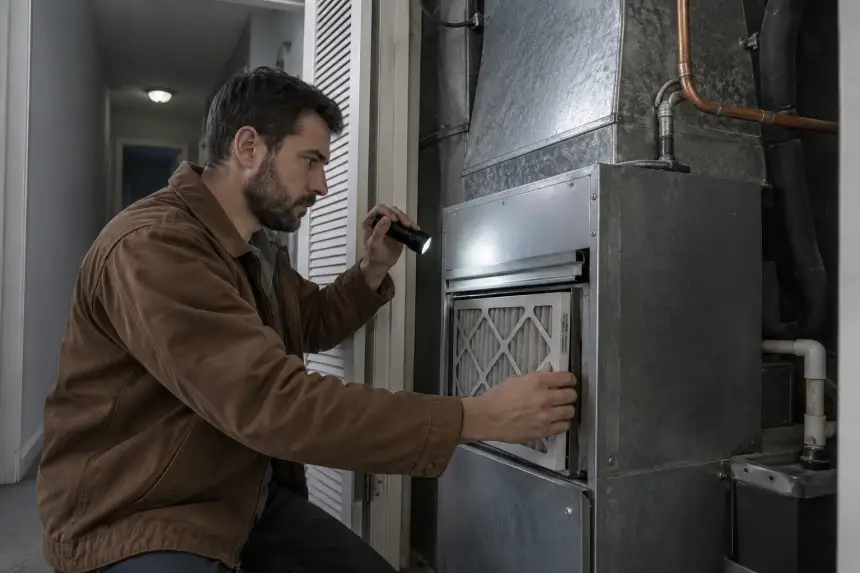
A fresh filter is the one thing off the shelf that genuinely does something, and it is worth being exact about what it reaches. A loaded filter chokes the air moving across the heat exchanger until the limit switch opens on temperature, and from the hallway that looks like a furnace that has died. Changing it is also the first thing a technician rules out, along with a flame sensor filmed over enough to make the burners light, drop out a few seconds later, try again, and lock out on the third attempt. A furnace that has had both done and still stops has stopped being a parts question.
Where all of that stops is the heat exchanger. High-temperature cement sits on the same hardware shelf as the filters, and a manufacturer sells it for flue collars and stove seams, not for a wall that separates combustion from the air in the house and moves every time the burners light. A patch hides the evidence and not the crack, and it hides it from the next person who opens the cabinet.
The other thing that gets bought is a bridge rather than a repair: a space heater to carry one room while the decision waits. It carries the room, honestly enough, and two things follow it. The load lands on the electric panel, which means a different bill and sometimes a different breaker. And space heaters start more house fires than any other kind of heating equipment, which is an argument for a short bridge rather than a long one.
When to stop and call
- The gas utility has tagged the furnace and shut the supply off.
- A technician has said the words heat exchanger, or a carbon monoxide alarm has gone off.
- This is the second service call on the same furnace in one heating season.
- Flame rolls out of the burner opening, or there is soot around the furnace door.
- The part it needs is on back order and the furnace was installed before 2010.
- The license
- Held by the contractor, not by this site, and issued where the work happens — Louisiana licenses at state level, at city level or not at all depending on the trade and the town. Ask for the number and the name it is held under: a trading name and the licensed entity are often not the same.
- The figure
- Set by the contractor and said before the work starts. This site never quotes and has no part in it. If a technician cannot say what the visit covers before beginning, that is the moment to stop.
- The call
- Describing what the system is doing commits you to nothing. Nothing is booked until you say so.
- Coverage
- By town, not by region. Poydras and the towns around it, and it shifts with who is taking calls at the hour you ring.
What the visit involves
- 01
The diagnosis
At the thermostat first, then at the furnace or the condenser, in the order the equipment runs. What the system is doing is established before any part is named.
- 02
The finding, out loud
What failed, whether it is the fault or a symptom of another one, and whether the repair suits the age of the system. A diagnostic visit is usually charged separately from the repair — ask whether it is credited if the work goes ahead, because that differs from one contractor to the next.
- 03
The repair
Agreed with the contractor before it starts. Where a part has to be ordered, a technician says so rather than leaving the system apart.
- 04
What happens after
A system that failed once in a season often fails again in it. Whether that is the same fault or a second one is worth asking while the technician is still there.
What to have ready when you call
- 01Roughly when the furnace was installed, and the model number — the data plate inside the door carries both.
- 02What the furnace is doing now — no heat at all, short cycling, a noise that started recently, or burners that light and drop out.
- 03Whether the gas utility has been out, and what the tag says word for word — the tag usually names the component.
- 04Whether the same ductwork also cools the house, and what the outdoor data plate lists as the refrigerant — R-410A, R-454B or R-22 — and the model number on that unit, which tells a contractor whether it only cools or heats as well.
- 05Where the furnace sits and what it vents into — a metal flue into a chimney, or a white plastic pipe through the wall — and whether a water heater shares that chimney, because one left alone on a flue sized for two appliances becomes its own piece of work. The address and ZIP code go with that.
Have the data plate from inside the furnace door in front of you, because it answers half the call — the year it went in and the model number. And if the gas utility left a tag on the appliance, leave the tag where it is: it names what has to be put right before the gas comes back.
Other services in Poydras
Furnace Replacement nearby