Ponderosa Pines, MT
Furnace and Heating Repair in Ponderosa Pines, MT
Furnace and heating repair in Ponderosa Pines, MT starts at the thermostat and follows the equipment through its start-up sequence to the step where it stops. Ponderosa Pines averages 174 days a year with a low of 32°F or colder and 82 at 20°F or colder (NOAA 1991–2020 normals, station 8 miles away). Half the homes in Ponderosa Pines were built in 2007 or later (Census ACS 2019–2023), so many houses here still run the equipment they were built with. A gas utility that finds a leak or an unsafe furnace shuts off the gas and tags the appliance, and the gas stays off until a contractor repairs the fault.
(888) 217-3739Montana contractors. No obligation for the call.
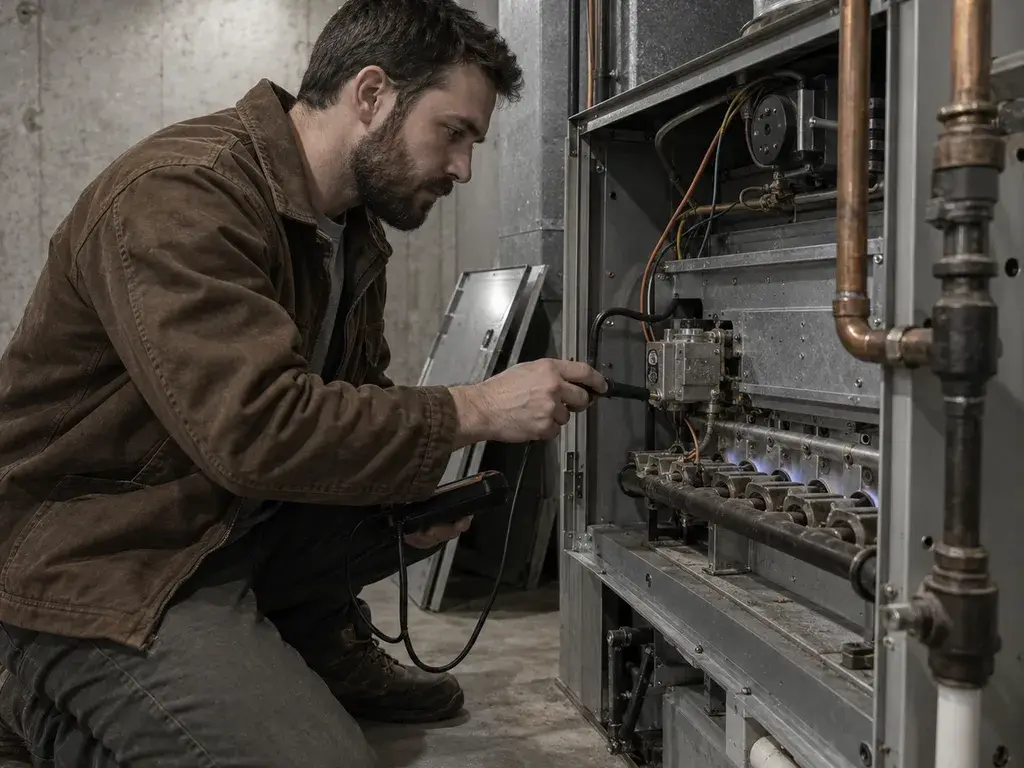
A system that has stopped making heat on a cold night has one of a short list of faults behind it, and the step where the sequence stops names the part. Say what heats the house, both thermostat numbers — the setting and the reading — and what the equipment is doing, and a heating contractor who covers Ponderosa Pines takes it from there.
Winter in Ponderosa Pines runs long enough that heating is the main system in the house rather than the second one, and a night without it is counted in hours rather than in inconvenience. A house that loses heat overnight in a cold snap has a plumbing question by morning, which is why this is a call worth making at the hour it happens rather than in the morning.
A winter this long decides which part gives up first. A furnace that has been firing since October reaches January with the hours on it, so what fails is usually the part that has been working rather than the part that was weakest when it went in: an ignitor has a certain number of starts in it, an inducer motor and a blower motor turn on bearings, and a flame sensor takes on a little more of what the flame leaves behind every cycle. A cold snap adds nothing to that but the timing.
Dry air is the reason a humidifier ends up mounted on the furnace itself, on the plenum or on the return — and where there is one, its faults get read as furnace faults. A solenoid stuck open puts standing water at the base of the cabinet, a pad gone solid with scale stops the humidifier doing anything at all, and a drain that plugs sends the overflow down the outside of the furnace. It is worth saying on the phone whether there is a humidifier on the system, because it changes what a technician opens first.
Ponderosa Pines, MT in numbers
| Days a year with a low of 32°F or colder | 174 | NOAA 1991–2020 normals, station 8 miles away |
|---|---|---|
| Days a year with a low of 20°F or colder | 82 | NOAA 1991–2020 normals |
| Average July dew point | 45°F | PRISM 1991–2020 normals |
| Median year homes were built | 2007 | Census ACS 2019–2023 |
| Households | 328 | Census ACS 2019–2023 |
| County | Gallatin County | Census Bureau |
| Federal minimum for a new split central AC | 13.4 SEER2 (North region) | DOE, 2023 standard |
Why heating faults do not fix themselves
A furnace that has to be reset to keep running is not a furnace that is working. Each lockout is a control board refusing to try again after a safety did not prove — the flame, the pressure switch or the limit — and a reset settles none of it. What a reset does change is the wear: a furnace short cycling through a cold week runs its ignition sequence dozens of times a day, and the ignitor and the inducer motor are the parts paying for it.
A heating tune-up before the season
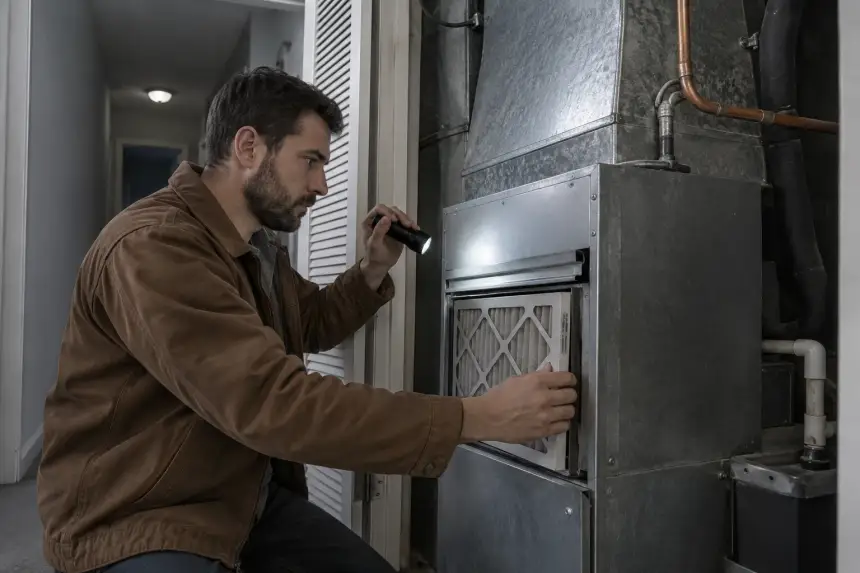
A tune-up does not promise a winter without a call, and a visit that finds nothing wrong has still told you the age and condition of the parts that fail first. It is a one-time visit. A service agreement is a separate decision, and booking the first does not require the second.
Signs it is time to call
- The furnace locks out again within an hour of being reset.
- There is a smell of gas, or a carbon monoxide alarm has gone off — outside first, then the gas utility, then the repair call.
- The blower runs and the air never warms, or the thermostat is asking for heat while the reading keeps dropping.
- The license
- Held by the contractor, not by this site, and issued where the work happens — Montana licenses at state level, at city level or not at all depending on the trade and the town. Ask for the number and the name it is held under: a trading name and the licensed entity are often not the same.
- The figure
- Set by the contractor and said before the work starts. This site never quotes and has no part in it. If a technician cannot say what the visit covers before beginning, that is the moment to stop.
- The call
- Describing what the system is doing commits you to nothing. Nothing is booked until you say so.
What the visit involves
- 01
The diagnosis
At the thermostat first, then at the furnace or the condenser, in the order the equipment runs. What the system is doing is established before any part is named.
- 02
The finding, out loud
What failed, whether it is the fault or a symptom of another one, and whether the repair suits the age of the system. A diagnostic visit is usually charged separately from the repair — ask whether it is credited if the work goes ahead, because that differs from one contractor to the next.
- 03
What happens after
A system that failed once in a season often fails again in it. Whether that is the same fault or a second one is worth asking while the technician is still there.
What to have ready when you call from Ponderosa Pines
- 01What the system is — a furnace, a boiler on radiators or baseboard, or a heat pump with electric backup.
- 02Roughly when it went in, plus the model and serial number from the data plate inside the cabinet door — the year is usually in the serial rather than printed as a date.
- 03What the equipment is actually doing — silent, clicking then stopping, lighting and dropping out, or blowing cold.
Leave the reset alone while you wait — each press relights a furnace that shut itself down for a reason, and the lockout it is holding is the first thing a technician reads.
Heating Repair in Ponderosa Pines: questions
How many freezing days does Ponderosa Pines have?
Ponderosa Pines averages 174 days a year with a low of 32°F or colder and 82 at 20°F or colder, by the 1991–2020 climate normals for a NOAA station 8 miles away. Heating is the main system here, and a furnace that quits in January is an emergency rather than an inconvenience.
How old are the homes in Ponderosa Pines?
Half the homes in Ponderosa Pines were built in 2007 or later, by the Census Bureau's 2019–2023 American Community Survey. Detached houses make up most of the housing. Many of those houses still run the equipment they were built with, so its install date is on the label at the furnace or the outdoor unit. Manufactured homes are common enough here that a packaged unit outside, feeding a duct under the floor, is worth mentioning on the call.
What does a red tag on a furnace in Ponderosa Pines mean?
A red tag means the gas utility found a leak or an unsafe appliance and shut the gas off to it. The gas stays off until a contractor repairs the fault, and a cracked heat exchanger is often where a red tag turns a repair into a replacement.
Other services in Ponderosa Pines
Heating Repair nearby