Ocean View, NJ
Furnace Replacement and Installation in Ocean View, NJ
Replacing a furnace in Ocean View, NJ starts with sizing the new one to the house rather than copying the label on the old one. Ocean View averages 118 days a year with a low of 32°F or colder and 35 at 20°F or colder (NOAA 1991–2020 normals, station 6 miles away). Half the homes in Ocean View were built before 1978 (Census ACS 2019–2023). The federal minimum for a new non-weatherized gas furnace is an AFUE of 80, and a 95 standard for furnaces made after December 18, 2028 is still in court.
(888) 217-3739New Jersey contractors. No obligation for the call.
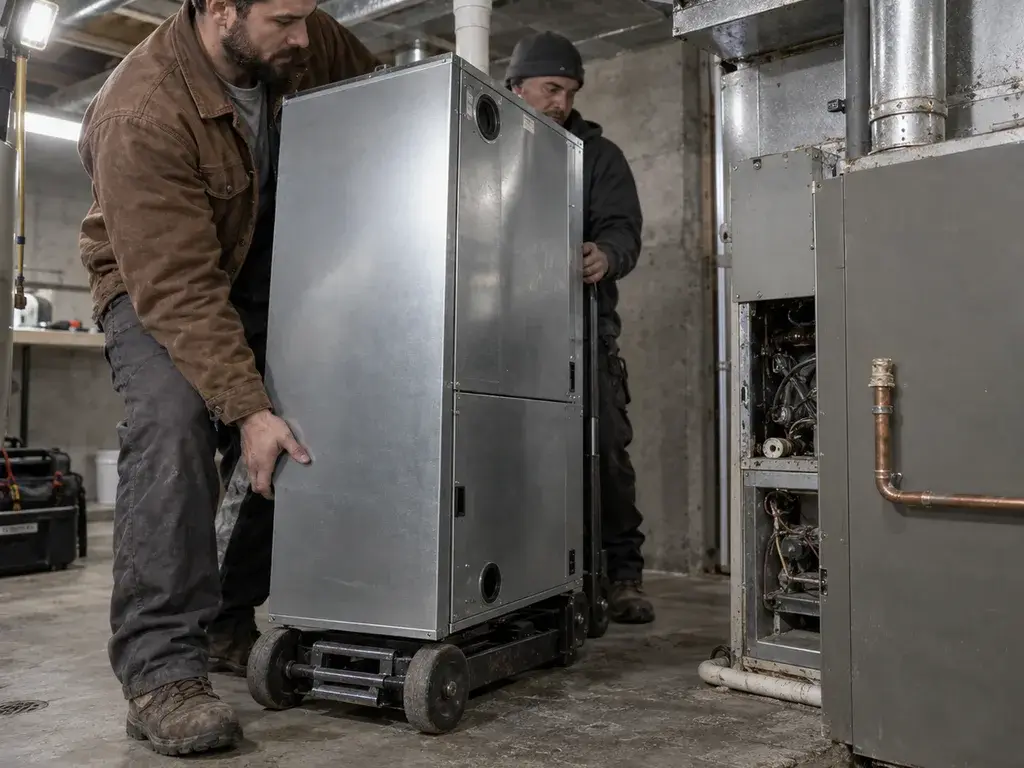
A furnace with one failed part and a furnace on its second service call of the season are asking different questions. Say roughly when it was installed and what it is doing, and a heating contractor can come out to Ocean View and answer that before anything is ordered.
In Ocean View both halves of the heating and cooling system do real work, and a contractor usually installed them in the same week. That is the part people miss when they look at the furnace on its own: the indoor coil sits in the same cabinet, and it is the same age.
When both halves go in on one visit a contractor opens the ductwork once, pulls one permit instead of two, and matches the pair. AHRI measures the rating on a new outdoor unit together with one particular indoor coil and publishes the two as a pair: set that unit against an old coil and the rating describes equipment nobody has put together. An outdoor unit charged with R-454B does not go onto a coil built for R-410A in the first place.
Salt air works on the outdoor unit and does not reach the equipment indoors, which is why near the water the two halves stop reaching the end of their lives together — the coil and the cabinet outside corrode years ahead of anything inside the house.
Ocean View, NJ in numbers
| Days a year with a low of 32°F or colder | 118 | NOAA 1991–2020 normals, station 6 miles away |
|---|---|---|
| Days a year with a low of 20°F or colder | 35 | NOAA 1991–2020 normals |
| Average July dew point | 66°F | PRISM 1991–2020 normals |
| Median year homes were built | 1978 | Census ACS 2019–2023 |
| Households | 276 | Census ACS 2019–2023 |
| County | Cape May County | Census Bureau |
| Federal minimum for a new split central AC | 13.4 SEER2 (North region) | DOE, 2023 standard |
Furnaces do not fix themselves
Nothing spent on an old furnace transfers to the new one. A large repair on an appliance installed before 2010 buys months rather than years — and if the fault turns out to be the heat exchanger, the gas utility takes the timing out of it altogether: it closes the supply, and the supply comes back only after a licensed contractor has worked on the appliance.
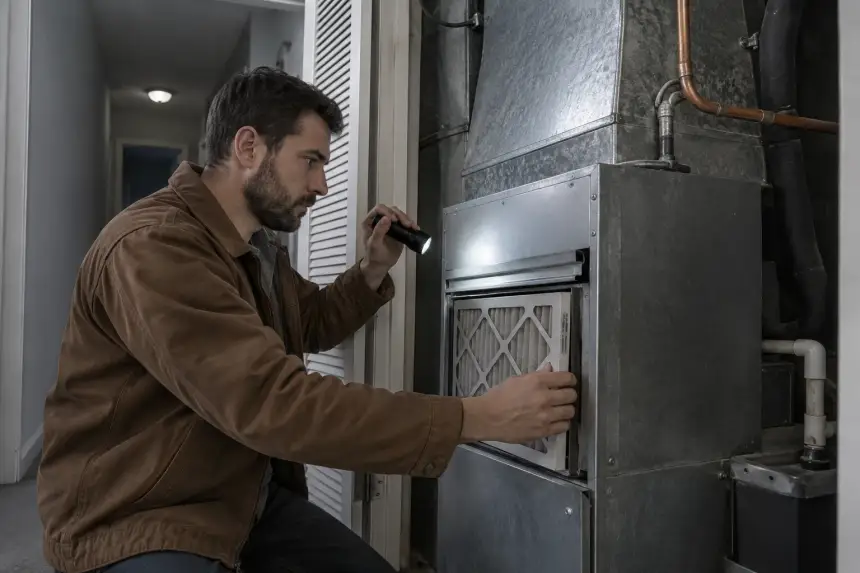
When to stop and call in Ocean View
- The gas utility has tagged the furnace and shut the supply off.
- A technician has said the words heat exchanger, or a carbon monoxide alarm has gone off.
- This is the second service call on the same furnace in one heating season.
- The figure
- Set by the contractor and said before the work starts. This site never quotes and has no part in it. If a technician cannot say what the visit covers before beginning, that is the moment to stop.
- The call
- Describing what the system is doing commits you to nothing. Nothing is booked until you say so.
- Coverage
- By town, not by region. Ocean View and the towns around it, and it shifts with who is taking calls at the hour you ring.
What the visit involves
- 01
The finding, out loud
What failed, whether it is the fault or a symptom of another one, and whether the repair suits the age of the system. A diagnostic visit is usually charged separately from the repair — ask whether it is credited if the work goes ahead, because that differs from one contractor to the next.
- 02
The repair
Agreed with the contractor before it starts. Where a part has to be ordered, a technician says so rather than leaving the system apart.
- 03
What happens after
A system that failed once in a season often fails again in it. Whether that is the same fault or a second one is worth asking while the technician is still there.
What to have ready when you call
- 01When the furnace went in, roughly, and its model number — the data plate inside the door carries both.
- 02What the furnace is doing now — no heat at all, short cycling, a noise that started recently, or burners that light and drop out.
- 03Where the appliance stands and what it vents into — a metal flue into a chimney, or a white plastic pipe through the wall — and whether a water heater shares that chimney, because one left alone on a flue sized for two appliances becomes its own piece of work. Give the address and ZIP code as well.
Have the data plate from inside the furnace door in front of you, because it answers half the call — the year it went in and the model number. And if the gas utility left a tag on the appliance, leave the tag where it is: it names what has to be put right before the gas comes back.
Furnace Replacement in Ocean View: questions
How cold does Ocean View get in winter?
Ocean View averages 118 days a year with a low of 32°F or colder and 35 at 20°F or colder, by the 1991–2020 climate normals for a NOAA station 6 miles away. Both halves of the system work hard here, and the heating side runs for months rather than weeks.
When were most houses in Ocean View built?
Half the homes in Ocean View were built before 1978, by the Census Bureau's 2019–2023 American Community Survey. Detached houses make up almost all of the housing. Equipment in houses of that age is often on its second set, and the install date on the label decides whether parts are still made.
How efficient must a new gas furnace be?
The federal minimum for a new non-weatherized gas furnace is an AFUE of 80. DOE has set 95 for furnaces made after December 18, 2028, and that rule is still being fought in court, so a furnace installed now can still be an 80 or a condensing 90-plus.
Other services in Ocean View
Furnace Replacement nearby