Oakhurst, NJ
Heat Pump Repair and Replacement in Oakhurst, NJ
A heat pump in Oakhurst, NJ works in both seasons, so its repair or replacement starts with how it behaves in each. Oakhurst has, on average, 94 days a year with a low of 32°F or colder and 24 at 20°F or colder (NOAA 1991–2020 normals, station 3 miles away). Half the homes in Oakhurst were built before 1965 (Census ACS 2019–2023), so in many of them the heating and cooling equipment has been replaced at least once while the ducts and the flue have not. The federal minimum for a split heat pump made since January 1, 2023 is 14.3 SEER2 in cooling and 7.5 HSPF2 in heating, nationwide.
(888) 217-3739New Jersey contractors. No obligation for the call.
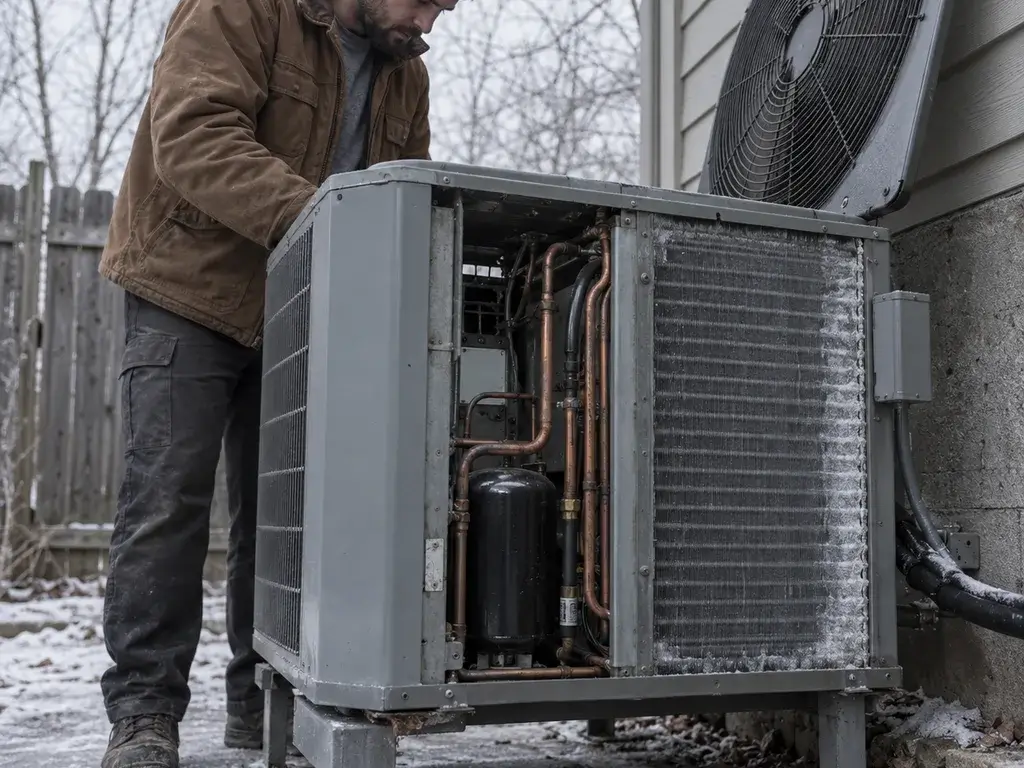
Air that feels cool at the vents in winter is usually the heat pump working as designed, and a heat pump that sits on auxiliary heat for hours in mild weather usually is not. Say what the thermostat reads and a heating and cooling contractor can come out to Oakhurst and tell the two apart.
A heat pump in Oakhurst carries most of the year on its own, cooling through the summer and heating through everything except the coldest weeks. That is the argument for one, and it is also what ages it: the compressor, the contactor and the capacitor take run hours an air conditioner in the same house would never see, which is why age on a heat pump is better counted in seasons worked than in years on the data plate — a system installed in 2012 that has worked both halves of every year since is further along than the date suggests.
Twice a year the machine has to change direction, and that is when the reversing valve gets tested — once in autumn and once in spring. A system that heated all winter and then will not cool when the first warm week of May arrives is usually pointing at that valve, or at the control that tells it to move, rather than at the compressor. Putting a spring failure off is easy, and that is the trap: the valve that would not move in May is the valve that has to move again in October, and a summer of leaving it alone does not fix it.
Because a heat pump works outdoors in both halves of the year, salt air gets far longer at its fins and its cabinet than it does at a machine that only cools, and a coil losing its aluminum fins loses capacity long before it loses refrigerant.
Oakhurst, NJ in numbers
| Days a year with a low of 32°F or colder | 94 | NOAA 1991–2020 normals, station 3 miles away |
|---|---|---|
| Days a year with a low of 20°F or colder | 24 | NOAA 1991–2020 normals |
| Average July dew point | 64°F | PRISM 1991–2020 normals |
| Median year homes were built | 1965 | Census ACS 2019–2023 |
| Households | 1,212 | Census ACS 2019–2023 |
| County | Monmouth County | Census Bureau |
| Federal minimum for a new split central AC | 13.4 SEER2 (North region) | DOE, 2023 standard |
Why heat pumps do not fix themselves
The parts that cycle are the ones that go first, and they do not go alone. A run capacitor that has lost capacitance does not stop the compressor — it raises the current the compressor draws every minute it runs, and the heat that comes with it. A heat pump asks for that on both sides of the year, where an AC only ever runs to cool, so the part that fails at the end of it is not the capacitor. A capacitor is a part; a compressor is a large fraction of the machine, and on a system installed before 2010 that is where the conversation turns to replacement.
When to stop and call
- Ice covers the outdoor coil and the defrost cycles are not clearing it.
- The breaker feeding the outdoor unit or the air handler will not stay in.
- Refrigerant was added in an earlier season and the system is behaving the same way again.
- The license
- Held by the contractor, not by this site, and issued where the work happens — New Jersey licenses at state level, at city level or not at all depending on the trade and the town. Ask for the number and the name it is held under: a trading name and the licensed entity are often not the same.
- The call
- Describing what the system is doing commits you to nothing. Nothing is booked until you say so.
- Coverage
- By town, not by region. Oakhurst and the towns around it, and it shifts with who is taking calls at the hour you ring.
What a visit in Oakhurst involves
- 01
The diagnosis
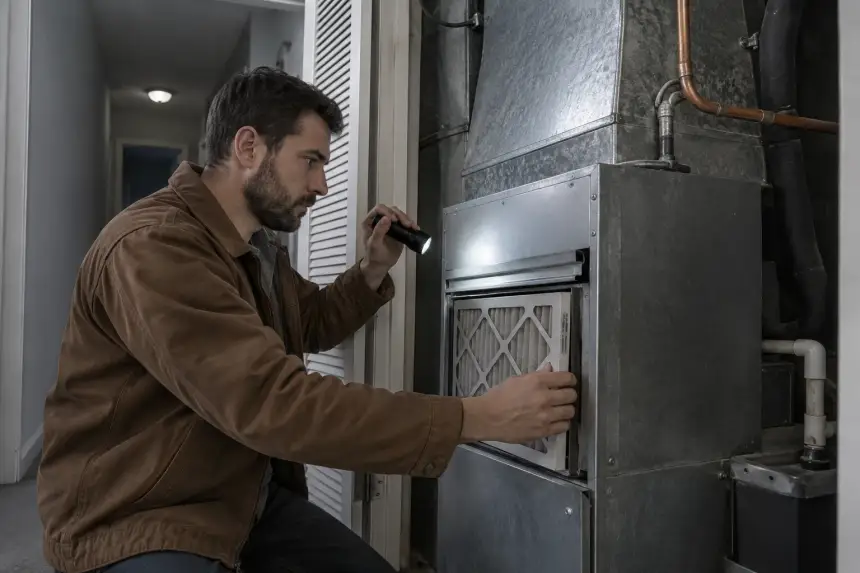
At the thermostat first, then at the furnace or the condenser, in the order the equipment runs. What the system is doing is established before any part is named.
- 02
The finding, out loud
What failed, whether it is the fault or a symptom of another one, and whether the repair suits the age of the system. A diagnostic visit is usually charged separately from the repair — ask whether it is credited if the work goes ahead, because that differs from one contractor to the next.
- 03
What happens after
A system that failed once in a season often fails again in it. Whether that is the same fault or a second one is worth asking while the technician is still there.
What to have ready when you call from Oakhurst
- 01That it is a heat pump, and what the backup is — electric, or a gas furnace on the same ducts, and not knowing is a fair answer.
- 02What the unit outside is doing: iced over, silent, running without stopping, or reversing every few minutes.
- 03The address and ZIP code, and whether the outdoor unit can be reached — a locked gate, a dog or deep snow changes the appointment.
Emergency heat is what that setting is for if the house has gone cold, but say on the phone that you switched to it, because it locks out the compressor, and the fault a technician needs to watch stops happening while it is on.
Heat Pumps in Oakhurst: questions
How many freezing days does Oakhurst have?
Oakhurst averages 94 days a year with a low of 32°F or colder and 24 at 20°F or colder, by the 1991–2020 climate normals for a NOAA station 3 miles away. Both seasons are real here, and the coldest weeks are when the backup strips or a furnace carry part of the load.
What is the July dew point in Oakhurst?
The July dew point in Oakhurst averages 64°F, by the PRISM 1991–2020 climate normals. In air that wet an oversized air conditioner cools the house fast, shuts off before it has dried the air, and leaves rooms cool and clammy, which is why sizing starts with a load calculation for the house.
Is a new R-410A system still allowed in Oakhurst?
Federally, yes, for equipment made or imported before January 1, 2025: the EPA dropped the January 1, 2026 installation deadline for that stock in a rule effective July 27, 2026. What has been made since January 1, 2025 runs on R-454B or R-32, and those outdoor units are not a listed match for a coil built for R-410A.
Other services in Oakhurst
Heat Pumps nearby