Millard, MO
AC Repair in Millard, MO
AC repair in Millard, MO begins with what the condenser outside is doing while the thermostat calls for cooling. The July dew point in Millard averages 66°F (PRISM 1991–2020 normals), so an air conditioner here removes moisture as well as heat. Half the homes in Millard were built before 1973 (Census ACS 2019–2023). A system made before 2010 may run on R-22, which has not been produced or imported since January 1, 2020; one made from 2010 through 2024 most likely runs on R-410A, which new equipment stopped using on January 1, 2025.
(888) 217-3739Missouri contractors. No obligation for the call.
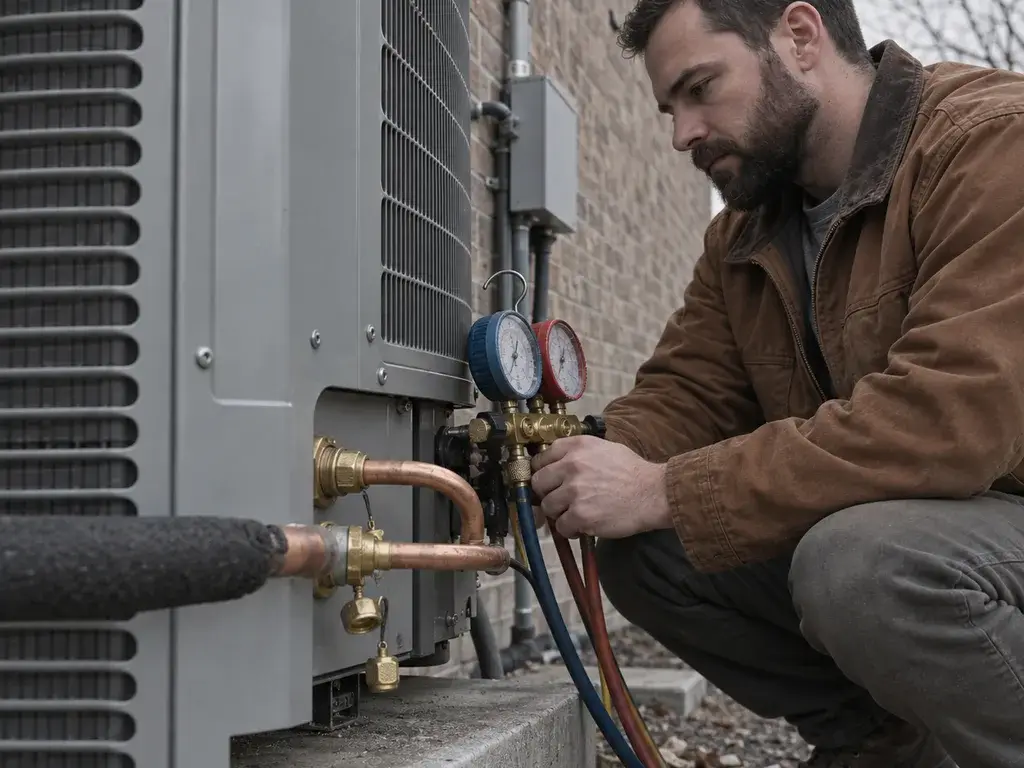
An air conditioner that runs without cooling and one that will not start at all are two different faults, and from the thermostat they look the same. Say which of the two is happening and an independent contractor can come out to Millard and settle it at the unit rather than at the thermostat.
The cooling side works a full summer here rather than a handful of hot weeks, which puts real hours on the compressor, the outdoor fan motor and the contactor. The two halves rarely wear out together, and that is what makes a repair on a system past fifteen years a decision rather than a job: the heating side can have years left in it while the outdoor unit does not.
Where the same blower and the same ducts serve both seasons, as they usually do, the two systems are not two machines at all, and that sorts a cooling fault before anyone opens anything. A house that heated normally through the winter and will not cool in July was running that shared half until spring, which points the question at the cooling side — the condenser, the contactor, the charge. A blower that had trouble through the winter points the other way, and the summer complaint is the second symptom rather than the first.
A heat pump in a winter like this one has backup heat behind it, and where that backup is electric resistance strips it can hide a cooling fault for a whole winter. A heat pump low on refrigerant loses heating capacity first; the strips make up the difference, the house stays warm, and the only thing that records it is the electric bill. Come July the same low charge has nothing to fall back on — which is why a summer call that begins with "it has never really cooled" is often a fault that was already there in February.
Millard, MO in numbers
| Days a year with a low of 32°F or colder | 125 | NOAA 1991–2020 normals, station in or next to town |
|---|---|---|
| Days a year with a low of 20°F or colder | 54 | NOAA 1991–2020 normals |
| Average July dew point | 66°F | PRISM 1991–2020 normals |
| Median year homes were built | 1973 | Census ACS 2019–2023 |
| Households | 31 | Census ACS 2019–2023 |
| County | Adair County | Census Bureau |
| Federal minimum for a new split central AC | 13.4 SEER2 (North region) | DOE, 2023 standard |
Why ACs do not fix themselves
A run capacitor does not always fail outright. A weak one lets the compressor start, but start hard — and a compressor that starts hard pulls locked-rotor current for longer every time the thermostat calls. The capacitor is a small cylinder that rides on the van; the compressor is the part that decides whether the system is worth keeping at all. Leaving a weak capacitor in place to avoid a small repair is how a small repair turns into a replacement.
An AC tune-up before the summer
No tune-up promises a summer without a call, and a visit that finds nothing wrong has still told you the age and condition of the parts that fail first. It is a one-time visit. A service agreement is a separate decision, and booking the first does not require the second.
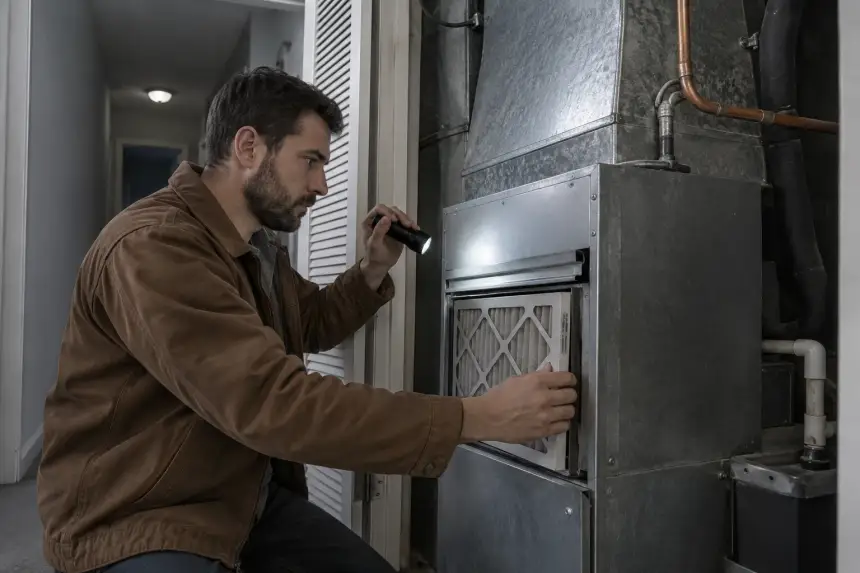
When to stop and call
- The breaker has tripped more than once. Resetting it again is the response that makes it worse.
- There is ice on the copper line or on the indoor coil in hot weather.
- Water is standing under the indoor unit, or there is a burning smell from either half.
- The license
- Held by the contractor, not by this site, and issued where the work happens — Missouri licenses at state level, at city level or not at all depending on the trade and the town. Ask for the number and the name it is held under: a trading name and the licensed entity are often not the same.
- The call
- Describing what the system is doing commits you to nothing. Nothing is booked until you say so.
- Coverage
- By town, not by region. Millard and the towns around it, and it shifts with who is taking calls at the hour you ring.
What the visit involves
- 01
The diagnosis
At the thermostat first, then at the furnace or the condenser, in the order the equipment runs. What the system is doing is established before any part is named.
- 02
The repair
Agreed with the contractor before it starts. Where a part has to be ordered, a technician says so rather than leaving the system apart.
- 03
What happens after
A system that failed once in a season often fails again in it. Whether that is the same fault or a second one is worth asking while the technician is still there.
Before you call: what to have ready
- 01What the system is — central air with a furnace, a heat pump, or a ductless mini-split.
- 02Both thermostat numbers — what it is set to and what it is reading.
- 03What the outdoor unit is doing: silent, humming, fan spinning, or tripping the breaker.
If there is ice anywhere on the system, switch the cooling off at the thermostat and leave the fan running: a technician cannot measure anything through a block of ice. A coil that has iced over takes a few hours to clear with the fan running, and about one day with the system off altogether — which is why the fan stays on.
AC Repair in Millard: questions
What is the July dew point in Millard?
The July dew point in Millard averages 66°F, by the PRISM 1991–2020 climate normals. In air that wet an oversized air conditioner cools the house fast, shuts off before it has dried the air, and leaves rooms cool and clammy, which is why sizing starts with a load calculation for the house.
How old are the homes in Millard?
Half the homes in Millard were built before 1973, by the Census Bureau's 2019–2023 American Community Survey. Detached houses make up about half of the housing. Equipment in houses of that age is often on its second set, and the install date on the label decides whether parts are still made. Manufactured homes are common enough here that a packaged unit outside, feeding a duct under the floor, is worth mentioning on the call.
Can an R-22 air conditioner in Millard still be recharged?
Only from stock already made or reclaimed: R-22 has not been produced or imported since January 1, 2020, and no new R-22 equipment has been made since 2010. Recharging one is lawful and expensive, and a system that keeps needing it has a leak, which is usually where the repair conversation turns to replacement.
Other services in Millard
AC Repair nearby