Max, NE
Heat Pump Repair and Replacement in Max, NE
Heat pump repair and replacement in Max, NE turns on how long the winter is and what heats the house when the heat pump cannot keep up. Max has, on average, 160 days a year with a low of 32°F or colder and 76 at 20°F or colder (NOAA 1991–2020 normals, station 8 miles away), and those colder days are when a heat pump leans on its backup heat. Half the homes in Max were built in 1992 or later (Census ACS 2019–2023). The federal minimum for a split heat pump made since January 1, 2023 is 14.3 SEER2 in cooling and 7.5 HSPF2 in heating, nationwide.
(888) 217-3739Nebraska contractors. No obligation for the call.
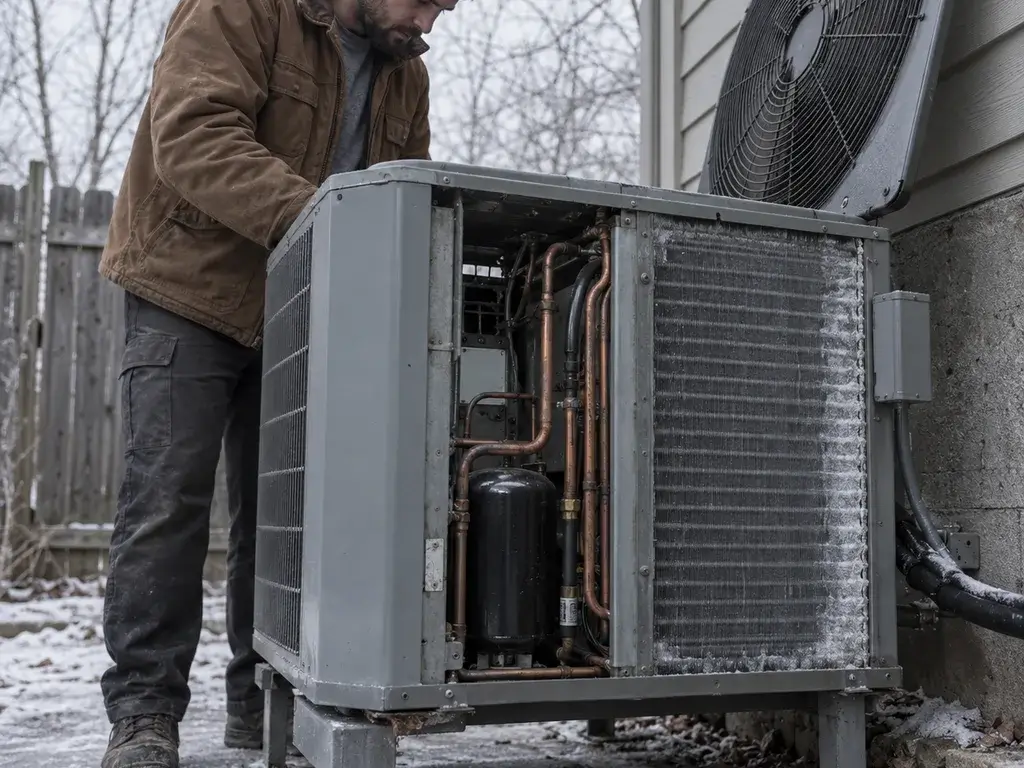
A heat pump blowing air that feels cool in winter is usually working as designed, and a heat pump that sits on auxiliary heat for hours in mild weather usually is not. Say what the thermostat is showing and a heating and cooling contractor can come out to Max and tell the two apart.
In Max a heat pump is a decision rather than the default, where the usual arrangement is a furnace with an air conditioner beside it, and the trade-off behind that decision is real: the heating season runs long enough that the hours when the machine is weakest add up to a season of their own. What moved in the last ten years is where those hours begin. A single-stage heat pump installed in 2010 lost output as the temperature dropped and handed most of January to its backup, while cold-climate inverter models hold much of their rated heating output down near 5°F — so the heat pump somebody remembers from an earlier winter and the one a contractor installs now are not the same machine.
What settles the argument is the balance point — the outdoor temperature below which a heat pump cannot hold the house on its own and something else carries the difference. That something is either a bank of electric resistance strips in the air handler or a gas furnace sharing the same ducts, which is the arrangement sold as dual fuel. The balance point belongs to the house and the machine together, not to the brand on the cabinet, and a technician reads it off the system rather than off a brochure.
Summer air here carries less water than it does further east, and air holding less water cools off faster once the sun is down. That puts a wide gap between afternoon and dawn, and in spring and autumn a heat pump answers both ends of it in a single day — cooling in the afternoon, heating before sunrise, with nobody switching anything over. What it costs is hidden in the thermostat: set the heating and cooling numbers close together and the system changes direction several times a day, and every change is the reversing valve moving and the compressor starting again. Ask where the changeover band sits — it is a setting, not a repair.
Max, NE in numbers
| Days a year with a low of 32°F or colder | 160 | NOAA 1991–2020 normals, station 8 miles away |
|---|---|---|
| Days a year with a low of 20°F or colder | 76 | NOAA 1991–2020 normals |
| Average July dew point | 60°F | PRISM 1991–2020 normals |
| Median year homes were built | 1992 | Census ACS 2019–2023 |
| Households | 11 | Census ACS 2019–2023 |
| County | Dundy County | Census Bureau |
| Federal minimum for a new split central AC | 13.4 SEER2 (North region) | DOE, 2023 standard |
Why heat pumps in Max do not fix themselves
The parts that cycle fail first, and they rarely fail alone. A run capacitor that has lost capacitance does not shut the compressor down — it raises the current the compressor draws every minute it runs, and the heat that comes with it. A heat pump asks for that on the heating side as well as the cooling one, where an AC only ever runs to cool, so the part that fails at the end of it is not the capacitor. A capacitor is a part; a compressor is a large fraction of the machine, and on a system installed before 2010 that is where the conversation turns to replacement.
When to stop and call
- Ice covers the outdoor coil and the defrost cycles are not clearing it.
- The thermostat sits on auxiliary or emergency heat for hours while it is mild outside.
- Refrigerant was added in an earlier season and the system is behaving the same way again.
- The figure
- Set by the contractor and said before the work starts. This site never quotes and has no part in it. If a technician cannot say what the visit covers before beginning, that is the moment to stop.
- The call
- Describing what the system is doing commits you to nothing. Nothing is booked until you say so.
- Coverage
- By town, not by region. Max and the towns around it, and it shifts with who is taking calls at the hour you ring.
What the visit involves
- 01
The diagnosis
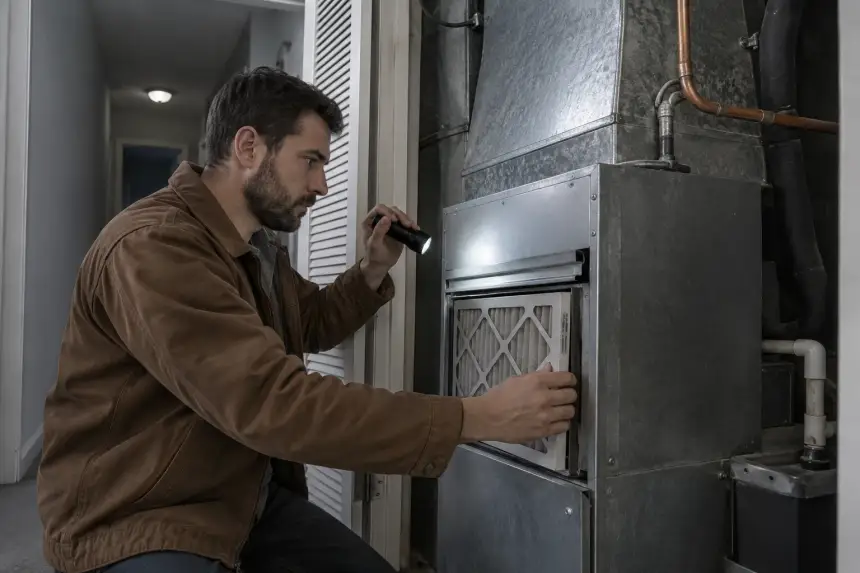
At the thermostat first, then at the furnace or the condenser, in the order the equipment runs. What the system is doing is established before any part is named.
- 02
The repair
Agreed with the contractor before it starts. Where a part has to be ordered, a technician says so rather than leaving the system apart.
- 03
What happens after
A system that failed once in a season often fails again in it. Whether that is the same fault or a second one is worth asking while the technician is still there.
What to have ready when you call from Max
- 01That it is a heat pump, and what the backup is — electric, or a gas furnace on the same ducts, and not knowing is a fair answer.
- 02Both thermostat numbers, and whether the display is showing auxiliary or emergency heat.
- 03The address and ZIP code, and how the outdoor unit is reached — a locked gate, a dog or deep snow changes the appointment.
If the house has gone cold, emergency heat is what that setting is for — say on the phone that you switched to it, because it locks out the compressor, and the fault a technician needs to watch stops happening while it is on.
Heat Pumps in Max: questions
How cold does Max get in winter?
Max averages 160 days a year with a low of 32°F or colder and 76 at 20°F or colder, by the 1991–2020 climate normals for a NOAA station 8 miles away. A winter that long leans on the backup heat, so a heat pump here is sized and set up for the cold half of the year.
How humid are summers in Max?
The July dew point in Max averages 60°F, by the PRISM 1991–2020 climate normals. In air that dry most of the cooling load is heat, and an air conditioner removes little water, so sizing turns on the house and its sun more than on humidity.
What efficiency does a new heat pump need in Max?
A split heat pump made since January 1, 2023 has to rate at least 14.3 SEER2 for cooling and 7.5 HSPF2 for heating under the federal standard, and the minimum is the same in every state, Nebraska included. The rating of the matched outdoor unit and coil is on the AHRI certificate, and a quote for Max can go above the minimum.