Harrisonburg, LA
Furnace Replacement and Installation in Harrisonburg, LA
Replacing a furnace in Harrisonburg, LA starts with sizing the new one to the house rather than copying the label on the old one. Harrisonburg averages 42 days a year with a low of 32°F or colder and 3 at 20°F or colder (NOAA 1991–2020 normals, station 19 miles away). Half the homes in Harrisonburg were built before 1972 (Census ACS 2019–2023). A gas furnace installed now must reach an AFUE of 80 or more under the federal minimum, while DOE's 95 rule for furnaces made after December 18, 2028 is still being litigated.
(888) 217-3739Louisiana contractors. No obligation for the call.
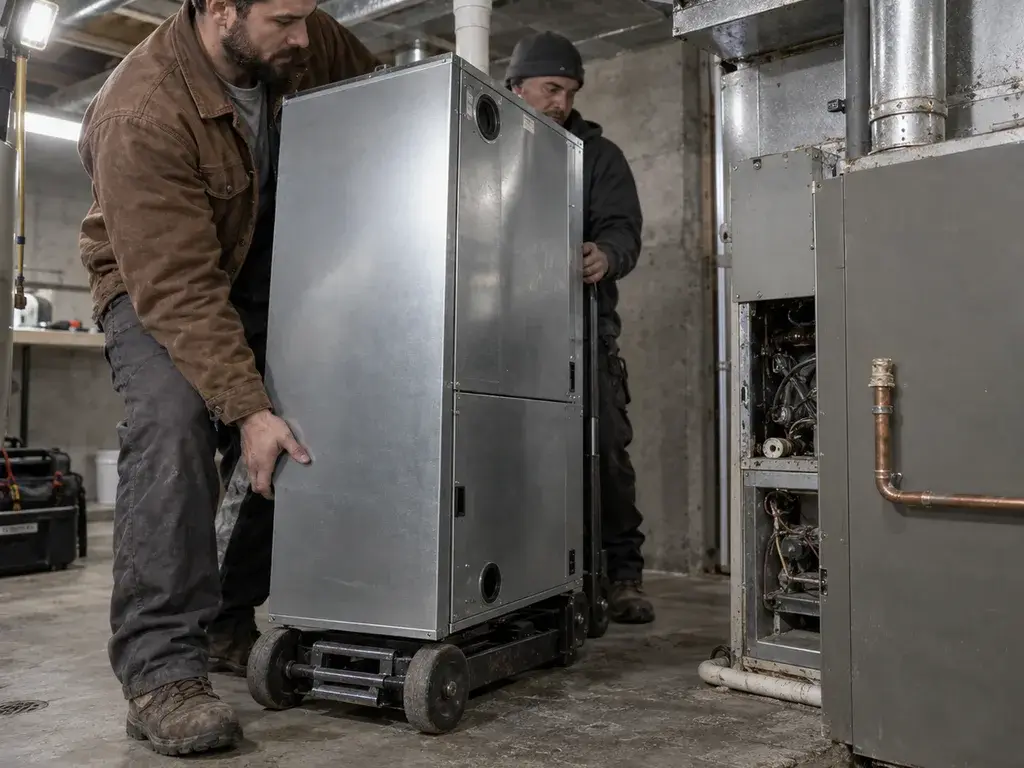
A furnace with one failed part and a furnace on its second service call of the season are asking different questions. Say roughly when it was installed and what it is doing, and a heating contractor can come out to Harrisonburg and answer that before anything is ordered.
A furnace in Harrisonburg runs a fraction of the hours one further north does, and that shows in how it fails. It seldom wears out — it sits idle for most of the year, and the first cold evening asks it to start.
What raises the replacement question here is usually the cooling side. A compressor fails in August, or the indoor coil leaks, and the cabinet comes apart for reasons that have nothing to do with heat — and the furnace stands there in the open, data plate showing, while the AC work goes on around it. The furnace is not the reason for the call, and it is still part of what gets decided that day.
A new furnace brings a new blower with it, and that blower runs in July as well as in January, which makes a changeout here a cooling decision as much as a heating one. In July most of the work is water rather than temperature: a system that cools the air fast, shuts down and leaves the house cold and sticky never ran long enough to dehumidify. Ask what the new blower does at part load, because one that holds a lower airflow for a longer cycle takes more water out of the same house.
Harrisonburg, LA in numbers
| Days a year with a low of 32°F or colder | 42 | NOAA 1991–2020 normals, station 19 miles away |
|---|---|---|
| Days a year with a low of 20°F or colder | 3 | NOAA 1991–2020 normals |
| Average July dew point | 73°F | PRISM 1991–2020 normals |
| Median year homes were built | 1972 | Census ACS 2019–2023 |
| Households | 153 | Census ACS 2019–2023 |
| County | Catahoula Parish | Census Bureau |
| Federal minimum for a new split central AC | 14.3 SEER2 under 45,000 Btu/h (Southeast) | DOE, 2023 standard |
Why furnaces in Harrisonburg do not fix themselves
Nothing spent on an old furnace transfers to the new one. A large repair on an appliance installed before 2010 buys months rather than years — and if the fault turns out to be the heat exchanger, the gas utility takes the timing out of it altogether: it closes the supply, and the supply comes back only after a licensed contractor has worked on the appliance.
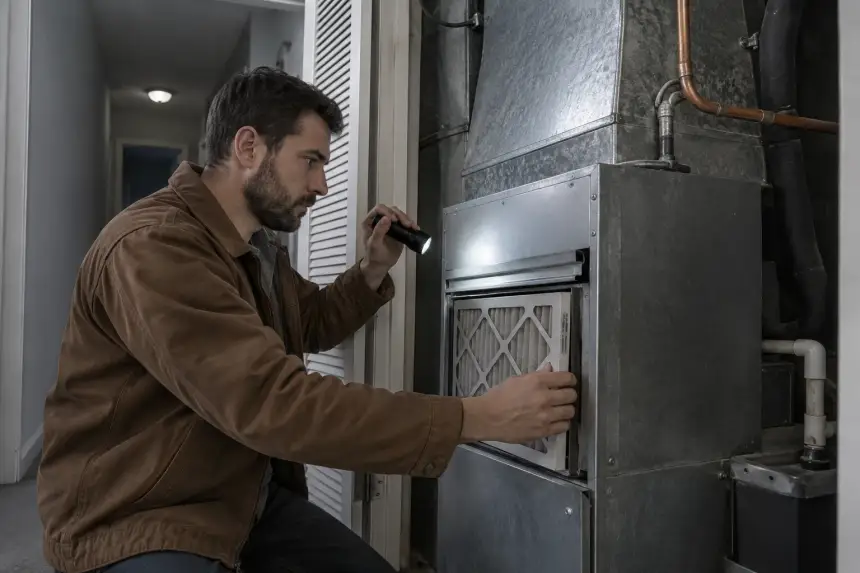
When to stop and call in Harrisonburg
- The gas utility has tagged the furnace and shut the supply off.
- Flame rolls out of the burner opening, or there is soot around the furnace door.
- The part it needs is on back order and the furnace was installed before 2010.
- The license
- Held by the contractor, not by this site, and issued where the work happens — Louisiana licenses at state level, at city level or not at all depending on the trade and the town. Ask for the number and the name it is held under: a trading name and the licensed entity are often not the same.
- The call
- Describing what the system is doing commits you to nothing. Nothing is booked until you say so.
- Coverage
- By town, not by region. Harrisonburg and the towns around it, and it shifts with who is taking calls at the hour you ring.
What happens on the visit
- 01
The diagnosis
At the thermostat first, then at the furnace or the condenser, in the order the equipment runs. What the system is doing is established before any part is named.
- 02
The finding, out loud
What failed, whether it is the fault or a symptom of another one, and whether the repair suits the age of the system. A diagnostic visit is usually charged separately from the repair — ask whether it is credited if the work goes ahead, because that differs from one contractor to the next.
- 03
The repair
Agreed with the contractor before it starts. Where a part has to be ordered, a technician says so rather than leaving the system apart.
What to have ready when you call
- 01When the furnace went in, roughly, and its model number — the data plate inside the door carries both.
- 02Whether the gas utility has been out, and what the tag says word for word — the tag usually names the component.
- 03Whether the same ductwork also cools the house, and what the outdoor data plate lists as the refrigerant — R-410A, R-454B or R-22 — and the model number on that unit, which tells a contractor whether it only cools or heats as well.
Have the data plate from inside the furnace door in front of you, because it answers half the call — the year it went in and the model number. And if the gas utility left a tag on the appliance, leave the tag where it is: it names what has to be put right before the gas comes back.
Furnace Replacement in Harrisonburg: questions
How many freezing days does Harrisonburg have?
Harrisonburg averages 42 days a year with a low of 32°F or colder and 3 at 20°F or colder, by the 1991–2020 climate normals for a NOAA station 19 miles away. Cooling leads here, and the heating runs for a few weeks of the year, so a fault often shows up on the first cold morning.
When were most houses in Harrisonburg built?
Half the homes in Harrisonburg were built before 1972, by the Census Bureau's 2019–2023 American Community Survey. Detached houses make up most of the housing. Equipment in houses of that age is often on its second set, and the install date on the label decides whether parts are still made. Manufactured homes are common enough here that a packaged unit outside, feeding a duct under the floor, is worth mentioning on the call.
How efficient must a new gas furnace be?
The federal minimum for a new non-weatherized gas furnace is an AFUE of 80. DOE has set 95 for furnaces made after December 18, 2028, and that rule is still being fought in court, so a furnace installed now can still be an 80 or a condensing 90-plus.
Other services in Harrisonburg
Furnace Replacement nearby