Greenwich, NJ
Furnace and Heating Repair in Greenwich, NJ
Heating repair in Greenwich, NJ comes down to finding the step where the furnace or heat pump stops in its start-up sequence. Greenwich averages 87 days a year with a low of 32°F or colder and 20 at 20°F or colder (NOAA 1991–2020 normals, station 9 miles away). Half the homes in Greenwich were built before 1938 (Census ACS 2019–2023), so in many of them the heating and cooling equipment has been replaced at least once while the ducts and the flue have not. A red tag from the gas utility means it found a leak or an unsafe furnace, and the gas to it stays off until a contractor fixes the fault.
(888) 217-3739New Jersey contractors. No obligation for the call.
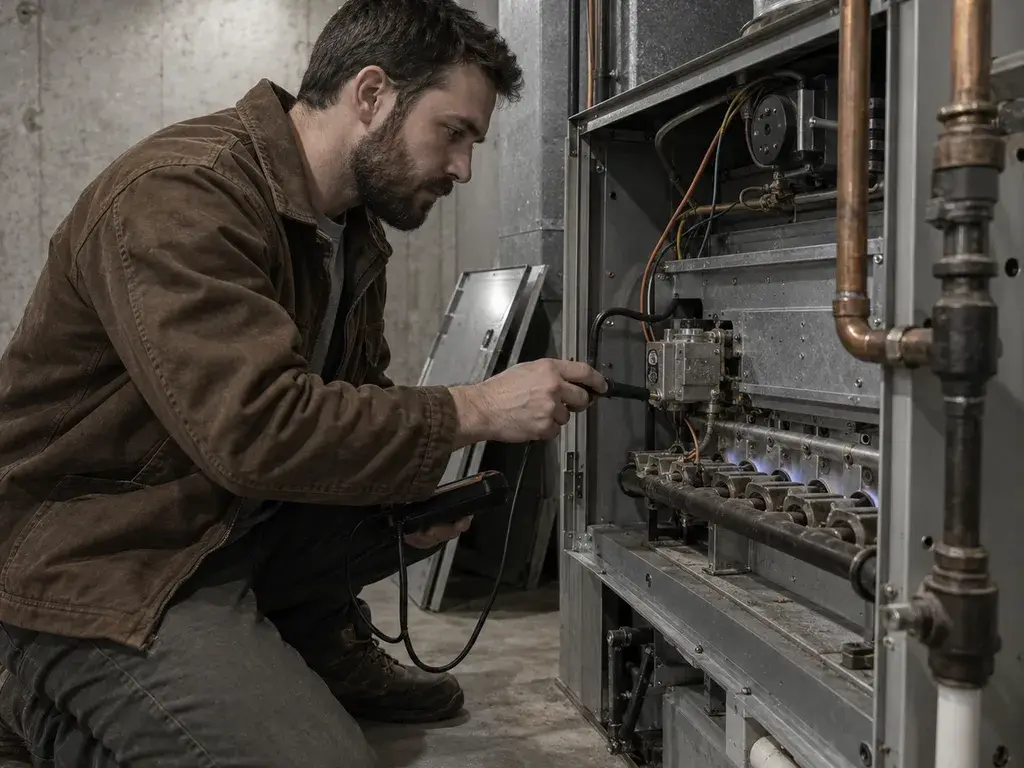
No heat on a cold night comes down to a short list of faults, and the step where the sequence stops names the part. Say what heats the house, both thermostat numbers — the setting and the reading — and what the equipment is doing, and a heating contractor who covers Greenwich takes it from there.
Here the year belongs to cooling, and the heating side of the system is the half that waits. Whatever heats the house has been sitting since spring, and the first cold night is the first thing to ask anything of it since then — which is why a heating fault in Greenwich keeps to a schedule.
Sitting idle is not the same as resting. The filter that loaded through the cooling season is still in the cabinet when the blower has to move heated air through it; where a gas furnace does the heating, an ignitor that has been cold since spring is the part that most often fails on the first cold start of the season, and last winter's coating is still on the flame sensor, because nothing has burned since and nobody cleaned it. That is why a lot of houses in Greenwich find out in the same week.
This close to the ocean, salt air works on the outdoor unit first, and where a heat pump makes the heat, that cabinet is the heating system. Corroded fins take heat out of cold air less well every winter, and a defrost sensor that has lost its grip on the coil leaves the unit to ice up with nothing to tell it to clear itself.
Greenwich, NJ in numbers
| Days a year with a low of 32°F or colder | 87 | NOAA 1991–2020 normals, station 9 miles away |
|---|---|---|
| Days a year with a low of 20°F or colder | 20 | NOAA 1991–2020 normals |
| Average July dew point | 66°F | PRISM 1991–2020 normals |
| Median year homes were built | 1938 | Census ACS 2019–2023 |
| Households | 55 | Census ACS 2019–2023 |
| County | Cumberland County | Census Bureau |
| Federal minimum for a new split central AC | 13.4 SEER2 (North region) | DOE, 2023 standard |
What the store-bought fix actually does
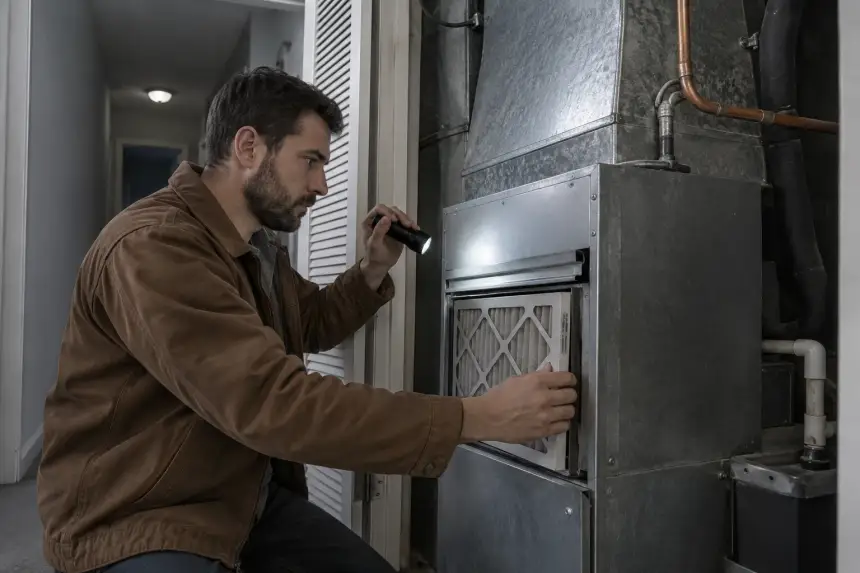
A new filter is the one thing off a hardware-store shelf that ends a no-heat call outright, and it is fair to say so: a filter loaded solid chokes the return, the heat exchanger cannot put its heat into air that is barely moving, the limit switch opens, and the furnace shuts itself down and short cycles. What a new filter cannot do is prove it was the fault. Where the furnace locks out again within a day of a new one going in, the restriction is somewhere past the filter, and a technician measures the temperature rise across the furnace to find where.
A heating tune-up before the season
A tune-up does not promise a winter without a call, and a visit that finds nothing wrong has still told you the age and condition of the parts that fail first. It is a one-time visit. A service agreement is a separate decision, and booking the first does not require the second.
Signs it is time to call
- The furnace locks out again within an hour of being reset.
- There is a tag on the furnace and the gas supply has been shut off.
- The blower runs and the air never warms, or the thermostat is asking for heat while the reading keeps dropping.
- The figure
- Set by the contractor and said before the work starts. This site never quotes and has no part in it. If a technician cannot say what the visit covers before beginning, that is the moment to stop.
- The call
- Describing what the system is doing commits you to nothing. Nothing is booked until you say so.
- Coverage
- By town, not by region. Greenwich and the towns around it, and it shifts with who is taking calls at the hour you ring.
What a visit in Greenwich involves
- 01
The diagnosis
At the thermostat first, then at the furnace or the condenser, in the order the equipment runs. What the system is doing is established before any part is named.
- 02
The finding, out loud
What failed, whether it is the fault or a symptom of another one, and whether the repair suits the age of the system. A diagnostic visit is usually charged separately from the repair — ask whether it is credited if the work goes ahead, because that differs from one contractor to the next.
- 03
The repair
Agreed with the contractor before it starts. Where a part has to be ordered, a technician says so rather than leaving the system apart.
What to have ready when you call
- 01What the system is — a furnace, a boiler on radiators or baseboard, or a heat pump with electric backup.
- 02Both numbers from the thermostat — the setting, and what it says the room is — and whether the screen has gone blank, because a thermostat wired without a common wire runs off its battery, and a dead battery looks exactly like a dead furnace.
- 03What it is doing: silent, clicking and stopping, lighting and dropping out, or running with cold air at the vents.
Leave the reset alone while you wait — each press relights a furnace that shut itself down for a reason, and the lockout it is holding is the first thing a technician reads.
Heating Repair in Greenwich: questions
How many freezing days does Greenwich have?
Greenwich averages 87 days a year with a low of 32°F or colder and 20 at 20°F or colder, by the 1991–2020 climate normals for a NOAA station 9 miles away. Cooling leads here, and the heating runs for a few weeks of the year, so a fault often shows up on the first cold morning.
How old are the homes in Greenwich?
Half the homes in Greenwich were built before 1938, by the Census Bureau's 2019–2023 American Community Survey. Detached houses make up almost all of the housing. In houses that age the furnace or air conditioner has usually been replaced at least once, and the ducts and the flue are often older than the equipment.
What efficiency does a new gas furnace in Greenwich need?
A new non-weatherized gas furnace has to reach an AFUE of at least 80 under the federal minimum. DOE has set 95 for furnaces made after December 18, 2028, and that rule is still being fought in court, so a furnace installed now can still be an 80 or a condensing 90-plus.
Other services in Greenwich
Heating Repair nearby