Folsom, LA
AC Replacement in Folsom
An air conditioner that no longer holds the house on a hot afternoon is not automatically finished, and what settles it is age, what failed, and what the system is charged with. Say roughly when it went in and what it is doing now, and an independent contractor can come out to Folsom and size the replacement from the house rather than from the box being carried out.
(888) 217-3739Louisiana contractors. No obligation for the call.
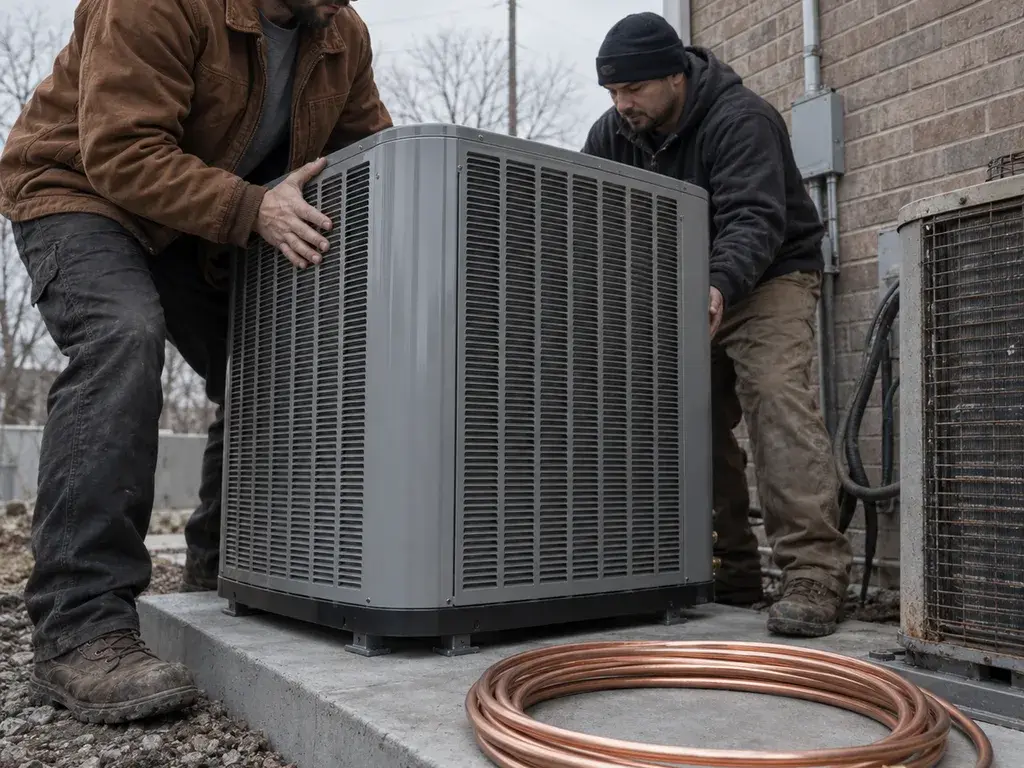
Frost is rare enough in Folsom that the calendar works differently here. In a heating climate a changeout can wait for the months when nobody asks the air conditioner for anything; here that stretch is shorter, and in a hot week it closes altogether. How many hours the system has actually run is the other half of it, and that varies more inside a mild-winter climate than the map suggests — a coastal summer and an inland one are not the same summer, and the same model reaches the end of its service life years apart in the two. Which is why the date the equipment went in decides less here than what a technician finds on the visit.
What the heating side actually is decides how much this replacement covers. Where winters are this mild, some houses heat with the same outdoor unit that cools them — a heat pump is one box doing two jobs — and others have a furnace or an electric air handler indoors and an air conditioner outside. If it is one box, replacing the cooling half replaces the heating half with it, and a day without the system in August is a different day from a day without it in January. A contractor settles which it is in the first minutes of the visit, and the answer changes the scope of the job.
The refrigerant change arrives with a new system, not with a repair. A system already charged with R-410A stays lawful to run, service, repair and recharge, and no end date is attached to that; what changed is what a new residential system arrives charged with, and since 1 January 2025 that is R-454B or R-32. Both are classed as mildly flammable, and neither is listed for equipment built for R-410A, so converting an existing system is not a repair path — replacing it is.
In air this wet, an air conditioner in Folsom spends much of its running time pulling water out of the air rather than dropping the temperature. That is what makes oversizing the expensive error here, and a changeout is where a contractor repeats it: an AC with more capacity than the house needs reaches the setting in a short burst and stops before it has taken much moisture out, so the thermostat reads satisfied while the house feels cold and damp at once. Ask what the contractor based the size on — a measurement of the house — and whether the new system can run at reduced output for longer, because long run time is what takes water out of the air. The condensate side comes with it: a system that runs those hours makes water all day, and the drain and the pan belong in the job rather than in a call the following summer.
Why air conditioners do not fix themselves
A sealed system does not use refrigerant up. A system that needed more of it in two different seasons has a leak nobody has located, and it will need more again. Each recharge buys one season, and on R-410A it buys that season for more than the last one, because the refrigerant is still made but under a shrinking national production allowance that steps down again in 2029, while the systems that need it stay in service.
What the leak costs is not only refrigerant. In most home systems the gas returning to the compressor is what cools it, so a system running undercharged runs its compressor hotter than it was built to run. A slow leak left alone is the ordinary way a compressor fails, and a compressor failure takes the choice of timing away: the changeout then happens in the week the system picks rather than the week you do.
Where R-22 is what the system runs on, the arithmetic is sharper. Manufacture of new R-22 equipment stopped in 2010 and production and import of the refrigerant ended in 2020, so a technician recharging one now is putting back refrigerant reclaimed from another system. Recharging it is still lawful and still possible; it is simply the expensive kind of leak, and it is usually the one that ends the repair conversation.
What the store-bought fix actually does
Of everything on the shelf, the sealed can with a gauge is what people reach for first, and it deserves an honest answer. A system low on refrigerant does cool badly, and putting refrigerant into it does make it cool better for a while — that part is real. Finding the hole is the one thing it cannot do: refrigerant is not used up, so a system that is low is leaking, and the gap between cans gets shorter every time. The cans on the shelf beside the motor oil are charged for car systems, which use a different refrigerant from a home air conditioner, and the ones with a sealant in them add a second problem to the first — sealant can set in the metering device, and it fouls the recovery machine a technician has to connect.
The hard-start kit also does what it says, which is exactly what makes it misleading. It adds starting torque to a compressor that is struggling to start, and it can carry a system through a hot weekend. Why the compressor was struggling is what it leaves untouched: worn bearings, tired windings, a failed run capacitor, or a voltage problem at the unit. A kit that has sat on a compressor for two seasons is propping up a machine that has been reporting something for two seasons.
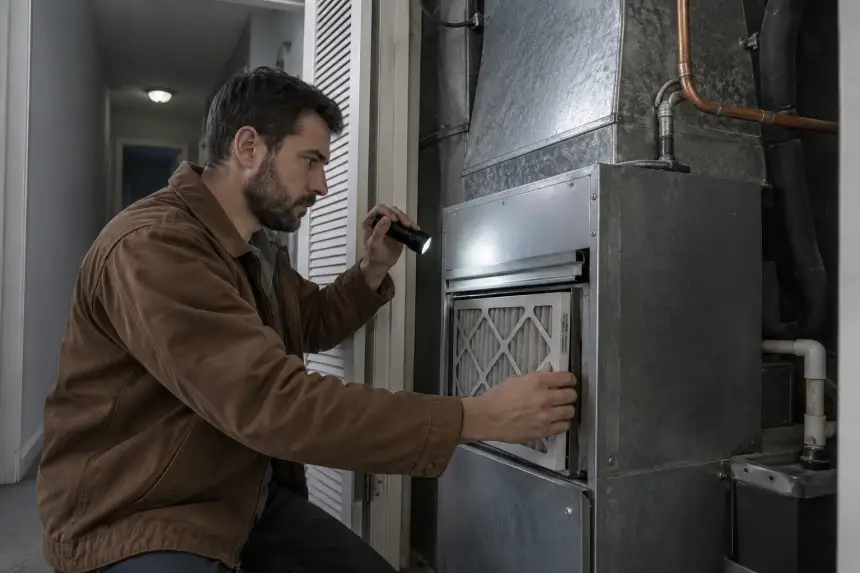
The filter is the exception on that shelf: it is not a repair pretending to be one, and it is worth being exact about what it reaches. A blocked filter starves the coil of air, the coil ices, and a coil that ices repeatedly sends liquid refrigerant back to the compressor — a real failure with an avoidable cause, and a clean filter removes that cause. What has already happened is beyond it: a compressor that has taken liquid, a coil that is iced now, or a charge that is low because the system is leaking. Ice that returns on a clean filter is not a filter problem at all, and at that point the filter has told you what it can.
When to stop and call
- You have had refrigerant added in two different seasons.
- You have read R-22 on the outdoor data plate, and the system is no longer holding the house.
- The compressor hums and then trips the breaker, and resetting it is the one thing you can do that makes it worse.
- Ice comes back on the line or the coil after you have put a clean filter in.
- Someone has told you to replace the system without having measured the house.
- The license
- Held by the contractor, not by this site, and issued where the work happens — Louisiana licenses at state level, at city level or not at all depending on the trade and the town. Ask for the number and the name it is held under: a trading name and the licensed entity are often not the same.
- The figure
- Set by the contractor and said before the work starts. This site never quotes and has no part in it. If a technician cannot say what the visit covers before beginning, that is the moment to stop.
- The call
- Describing what the system is doing commits you to nothing. Nothing is booked until you say so.
- Coverage
- By town, not by region. Folsom and the towns around it, and it shifts with who is taking calls at the hour you ring.
What the visit involves
- 01
The diagnosis
At the thermostat first, then at the furnace or the condenser, in the order the equipment runs. What the system is doing is established before any part is named.
- 02
The finding, out loud
What failed, whether it is the fault or a symptom of another one, and whether the repair suits the age of the system. A diagnostic visit is usually charged separately from the repair — ask whether it is credited if the work goes ahead, because that differs from one contractor to the next.
- 03
The repair
Agreed with the contractor before it starts. Where a part has to be ordered, a technician says so rather than leaving the system apart.
- 04
What happens after
A system that failed once in a season often fails again in it. Whether that is the same fault or a second one is worth asking while the technician is still there.
What to have ready when you call
- 01Roughly when the system went in, and what refrigerant it is charged with — the model number is worth having in front of you too.
- 02Whether anyone has looked at the system this season, and what they said was wrong.
- 03What happens when the system runs — not cooling at all, cooling weakly, running without ever stopping, tripping the breaker, or icing over.
- 04Whether the indoor coil shares a cabinet with a furnace or an air handler, and whether both went in on the same day.
- 05The address and ZIP code, and what stands between the street and the outdoor unit — a locked gate or a dog in the yard changes the appointment.
Read the outdoor data plate before you call — the model number and the refrigerant are printed on it, and those two lines decide most of what follows.
Other services in Folsom
AC Replacement nearby